


23.7K certified reviews
Yoga Bolsters
Relieve tension and add some extra support to your practice with a high-quality, cushioning yoga bolster.
Finding the perfect exercise gear is hard. We’ll make it easy.
Take our 30 sec quiz.Trusted By Our Loyal Customers

Free shipping over $35

Exceptional Value

Finance starting from $19/month
Finding the perfect exercise gear is hard. We’ll make it easy.
Take our 30 sec quiz.
sort by:
Product Type:

From our gear experts
What is a yoga bolster?
A yoga bolster is a versatile prop designed to support and enhance your yoga practice. It's essentially a firm, elongated cushion that can be used in various ways to provide comfort, stability, and deeper stretches. Yoga bolsters are commonly used in restorative yoga poses, pranayama (breathing exercises), and meditation to help align the body, open the chest, and promote relaxation. They can also be used to modify poses for different levels of flexibility and to support injuries or limitations.
How can I use a yoga bolster?
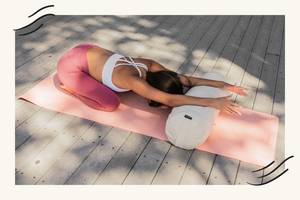
Yoga bolsters are useful for support, alignment, and deepening relaxation during your yoga practice. Try placing your bolster under your knees in savasana (corpse pose) to relieve lower back tension, or use it to support your spine in seated forward bends or restorative twists. Inversions like viparita karani (legs-up-the-wall) pose become even more relaxing with a bolster under your hips. The bolster can also be positioned under your chest in supported backbends to open the heart and shoulders.
Bolsters can also create a sense of grounding and comfort in restorative poses. Try placing the bolster lengthwise along your spine and resting your back on it, allowing your body to melt into the support. This can help to calm the nervous system and promote a sense of well-being. Above all else, just do what works for you. Experiment with different placements and poses to find what feels best for your body.
Bolsters can also create a sense of grounding and comfort in restorative poses. Try placing the bolster lengthwise along your spine and resting your back on it, allowing your body to melt into the support. This can help to calm the nervous system and promote a sense of well-being. Above all else, just do what works for you. Experiment with different placements and poses to find what feels best for your body.
How do you sit on a yoga bolster?
Sitting on a yoga bolster can be done in a few different ways depending on the pose and your intention. A common way is to sit with your legs crossed, placing the bolster under your sit bones to elevate your hips above your knees. This can improve posture and make seated meditation more comfortable. You can also experiment with sitting in a kneeling position with the bolster lengthwise between your calves and under your buttocks. This can be helpful for hip flexor stretches. Ensure that the bolster provides comfortable support and allows you to maintain a stable and upright spine.
What are yoga bolsters made from?
Our Sequoia Yoga Bolster has a removable, machine-washable cotton cover, filled with polyester for firm support without running up the price. Other common yoga bolster materials include foam, cotton, and buckwheat.
What is the best yoga bolster shape?
Yoga bolsters come in several shapes. The two most common are rectangular or round (oval). There isn't a single “best” yoga bolster shape, as both rectangular and round bolsters offer support and comfort, but they do have some differences. Rectangular bolsters provide a firm and stable surface, making them ideal for seated poses, backbends, and restorative practices. Their broad, flat surface offers consistent support along the spine. Oval bolsters, on the other hand, offer a more gentle, contoured support that can cradle the body's curves. This makes them suitable for restorative poses and practices that require more flexibility and adaptability in positioning, and also to add support below the spine or knees.
What to look for when buying a yoga bolster?
There are several things to consider when buying a yoga bolster, including shape, firmness, filling and cover, portability, and price. Like we mentioned above, rectangular bolsters offer firm, stable support, while round ones provide gentler, contoured support. Consider your preferred yoga style and the poses you'll be using it for. Also, think about the bolster's size relative to your own body. You want it to provide adequate support without being too bulky or too small. Our round bolsters are 28” x 10” x 10”, and our rectangular bolsters are 24” x 12” x 6”.
Think about covers and fillings, too. The cover material should be durable, easy to clean (removable and washable is ideal), and feel comfortable against your skin. The filling should be supportive and firm, by your preference. Common fillings include polyester, foam, cotton, and buckwheat hulls. Each has its own feel and density. Cotton is ultra-soft and plushy, polyester and foam offer consistent firmness and low cost, and buckwheat hulls conform to your body and provide a slightly heavier feel. If you plan to transport your bolster to and from the studio, consider whether it has a carrying handle, like our Sequoia Yoga Bolster. Last but not least, yoga bolsters range in price, so set a budget beforehand. Remember, higher price does not guarantee better quality. A yoga bolster is a simple tool, and doesn’t need to be expensive.
Think about covers and fillings, too. The cover material should be durable, easy to clean (removable and washable is ideal), and feel comfortable against your skin. The filling should be supportive and firm, by your preference. Common fillings include polyester, foam, cotton, and buckwheat hulls. Each has its own feel and density. Cotton is ultra-soft and plushy, polyester and foam offer consistent firmness and low cost, and buckwheat hulls conform to your body and provide a slightly heavier feel. If you plan to transport your bolster to and from the studio, consider whether it has a carrying handle, like our Sequoia Yoga Bolster. Last but not least, yoga bolsters range in price, so set a budget beforehand. Remember, higher price does not guarantee better quality. A yoga bolster is a simple tool, and doesn’t need to be expensive.
How thick should a yoga bolster be?
The ideal thickness of a yoga bolster depends on your body size, preferences, and the types of yoga you practice. Round bolsters commonly range from 4 to 10 inches in diameter, but 8 to 10 inches is a popular choice for general use. Narrower round bolsters are mostly used for specific, advanced practices. Rectangular bolsters are smaller, typically having a diameter of 5 to 6 inches.
There are a few factors you can consider when choosing bolster thickness. If you have a longer torso, you might prefer a thicker bolster for better support in seated poses and backbends. If you're less flexible, a thinner bolster might be more comfortable for forward bends and restorative poses. You can also fold blankets or towels to add height to your bolster if needed. Remember, when sitting on a bolster, your hips should be higher than your knees, and your spine should be comfortably upright. If you feel strain in your back or hips, the bolster could be too thick or thin.
There are a few factors you can consider when choosing bolster thickness. If you have a longer torso, you might prefer a thicker bolster for better support in seated poses and backbends. If you're less flexible, a thinner bolster might be more comfortable for forward bends and restorative poses. You can also fold blankets or towels to add height to your bolster if needed. Remember, when sitting on a bolster, your hips should be higher than your knees, and your spine should be comfortably upright. If you feel strain in your back or hips, the bolster could be too thick or thin.
How firm should a yoga bolster be?
The ideal firmness for a yoga bolster is a matter of personal preference. Will you primarily use the bolster for backbends, forward folds, or relaxation? A firmer bolster is generally better for backbends, while a softer one might be preferable for forward folds and relaxation, and really any type of restorative yoga or gentle practice. If you practice more active styles or use the bolster for support in challenging poses, a firmer bolster will provide better stability. Sheer body weight also plays a role. If you're heavier, you might also need a firmer bolster to prevent it from compressing too much and losing its shape.
Can you sleep with a yoga bolster?
While yoga bolsters are primarily designed for yoga and meditation, some people find it comfortable to place them between or beneath knees or low back while sleeping, as well. They can provide support and alignment for the spine, hips, and knees, which can be particularly helpful for side sleepers or those with back pain. It’s a matter of personal preference.
What can I use instead of a yoga bolster?
If you don't have a yoga bolster, get creative with household items! Firmly rolled blankets or towels can work well for support in many poses. A stack of pillows can also mimic the shape and height of a bolster, especially for restorative practices. You could also fill a sturdy pillowcase with blankets or clothes to create a makeshift bolster. Some yogis also use meditation cushions in lieu of a yoga bolster. Experiment with different options to find what provides the right level of comfort and support for your needs.
What is the difference between a yoga bolster and a meditation cushion?
While both are used for comfort and support in yoga and meditation, bolsters and meditation cushions differ in their shape and purpose. Yoga bolsters are generally longer and cylindrical (though they can be rectangular), and designed to support the body in various poses. They provide elevation and can be placed under the knees, back, or torso for deeper stretches and relaxation. Meditation cushions, on the other hand, are smaller and often round, and specifically designed for seated meditation, not a variety of poses. They elevate the hips, promoting an upright posture and reducing strain on the knees and ankles during extended sitting meditation sessions.