


The Best Cities in America for Beginning Bikers
At retrospec, we believe biking should welcome beginners everywhere — creating rides that feel safe, fun, and inviting, whether you’re pedaling your first mile or exploring a city designed for new riders. But not every city is created equal when it comes to safety and convenience for urban biking.
Our study gathered data from hundreds of cities that illuminates their bike friendliness. We then layered insights from 1,000 surveyed Americans regarding their bicycling habits and experiences in their cities.

The results highlight the top U.S. cities that make it easy and enjoyable for beginner bikers to hit the road for both exercise and fun
The Study
When it comes to safety and comfort for bikers, not all cities are created equal. Our study ranked 58 cities across the U.S. based on these key factors:
- Bike-friendly infrastructure
- Cyclist fatalities
- Availability of bike stores
- Online reviews
- What makes people want to ride more
- What makes people feel safe while riding
- How riders respond to aggressive drivers
Key Findings
Each variable was carefully weighted to create the following index.
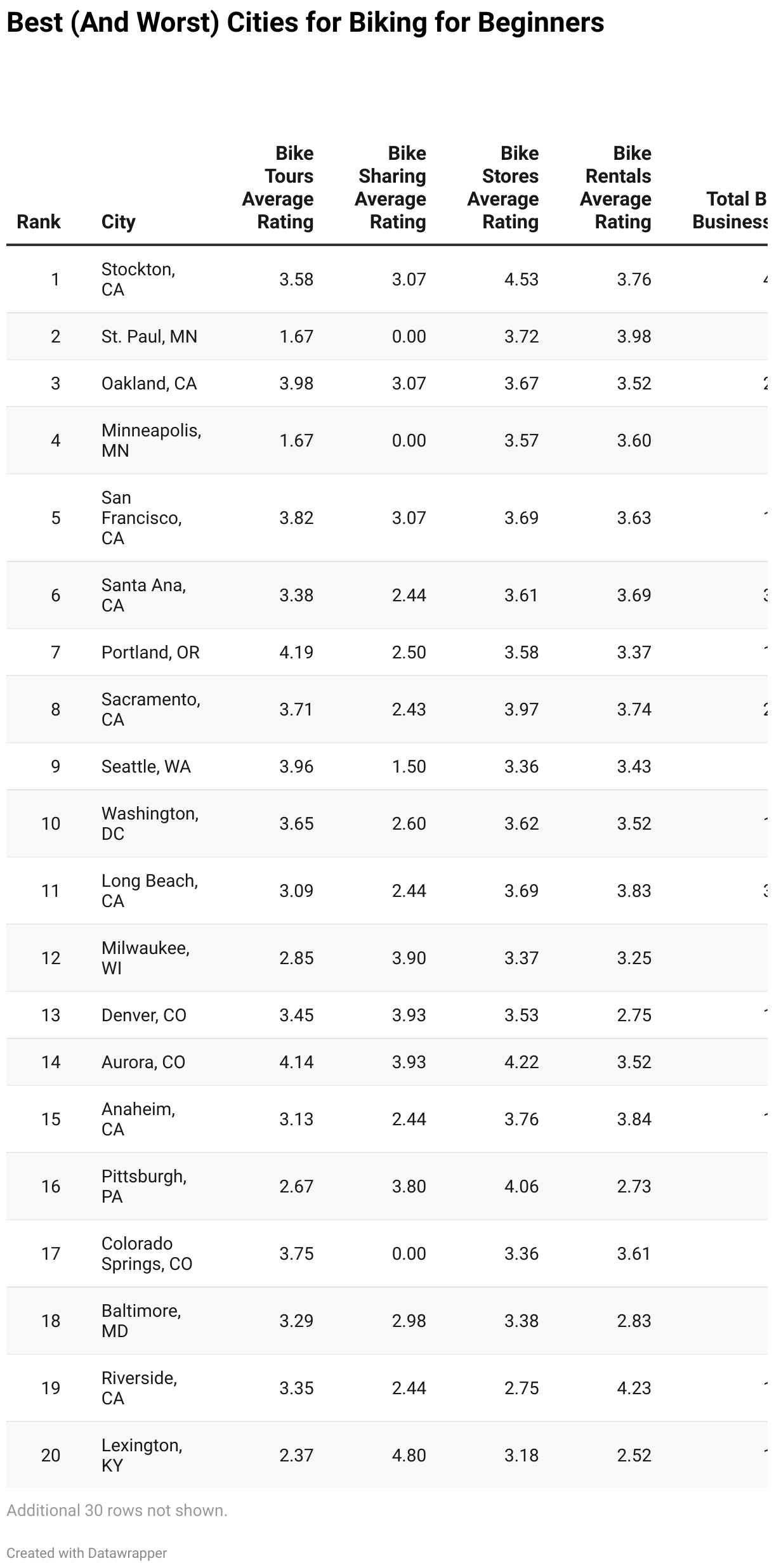
The best cities for beginning bikers are Stockton, California, Saint Paul, MN, and Oakland, California.
The worst, on the other hand, are El Paso, Texas, Corpus Christi, Texas and Memphis, Tennessee.
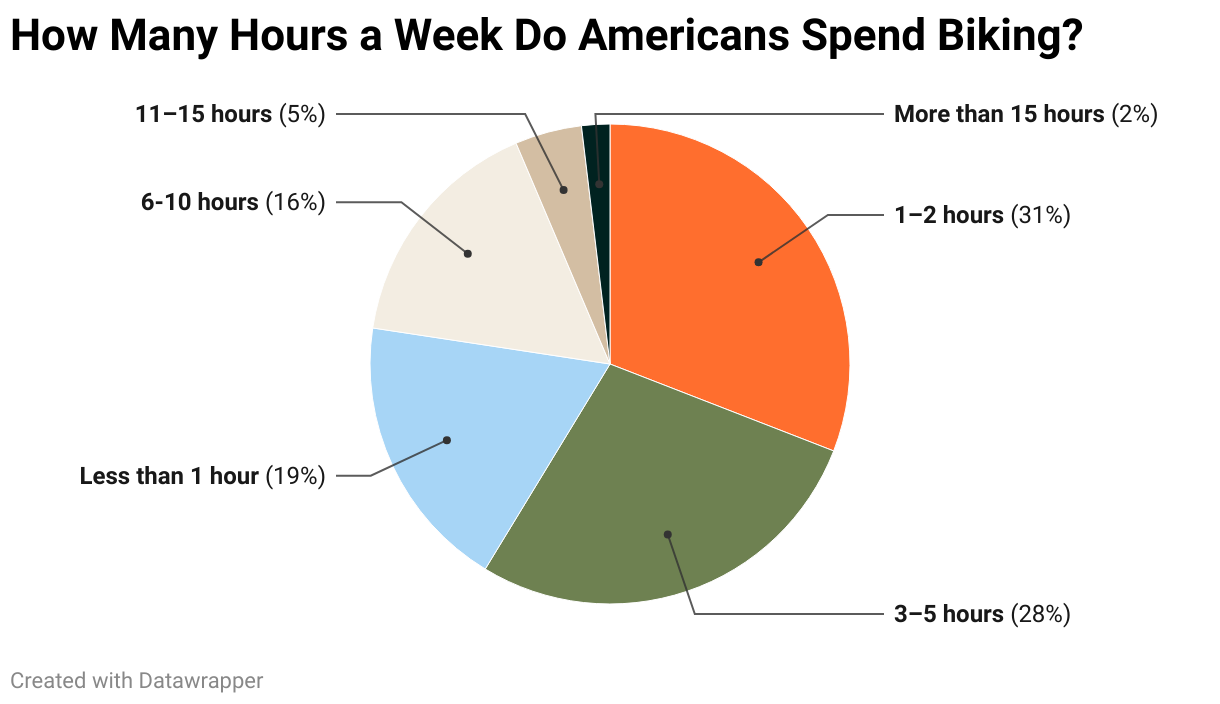
Nearly one quarter of Americans ride their bike more than five hours a week.
20% of bikers have been verbally assaulted by drivers or pedestrians.
Nearly half of bikers have experienced a vehicle passing them dangerously.
50% of bikers say more protected bike lanes or trails would encourage them to
ride their bike more often.
1 in 4 bikers have crashed or fallen and sustained injuries.
1 in 10 bikers have had their bike stolen this past year.
Over 30% of baby boomers say it is not easy to find beginner-friendly bike routes in their city
Top 15 Most Bikeable Cities for Beginners
We analyzed 15 points of data to rank these cities for their bike friendliness.
1. Stockton, California
Stockton set forth a bicycle master plan in 2017 and has built in over 100 miles of bike paths and trails including the Calaveras River Bike Path. Also, Stockton’s geography is flat. No steep hills to climb. Add Stockton’s year round favorable weather and low crime rate to the mix and we have a winner.
2. Saint Paul, Minnesota
Saint Paul has gone to great lengths to make their city bike-friendly. They lowered speed limits for cyclists. They built the Gateway state trail that connects the twin cities and have developed over 180 miles of established paths and trails with a city plan to expand to over 300 in the coming decade. Their tough winters lower their overall ranking for accessibility, though.
3. Oakland, California
Oakland has been designated a "Gold Level Bicycle Friendly Community" by the League of American Bicyclists, a distinction held by only a few dozen cities nationwide. While there is a growing network of protected lanes, some major streets can still be difficult to navigate due to heavy car and truck traffic. Cyclists often need to plan their routes to use quieter side streets to avoid these area.
4. Minneapolis, Minnesota
Saint Paul's sister city Minneapolis ranks highly partly because of its Off-Street Urban Trails: The city has a vast network of dedicated, off-street trails that were often built on repurposed railroad corridors. The most famous of these is the Midtown Greenway, a 5.5-mile trail that runs through south Minneapolis, completely separated from car traffic. Like Saint Paul though the ice and snow limits the days that you can bike.
5. San Francisco, California
San Francisco has a very active bike advocacy community, including groups like the San Francisco Bicycle Coalition, which has successfully lobbied for better infrastructure. San Francisco is famously hilly. This holds the city back from a higher ranking, although electric commuter bikes have taken much of the pain out of those steep hills.
6. Santa Ana, California
In Santa Ana biking is an essential form of transportation, not just for recreation. Santa Ana is almost entirely flat, which makes it very easy to ride a bike without dealing with hills. Also, biking year round is an option for its residents. Bringing its ranking down however, is Santa Ana's high numbers of bicycle collisions and fatalities.
7. Portland, Oregon
The city's Bureau of Transportation has a comprehensive Bicycle Master Plan and continues to innovate with its projects, such as its extensive network of "bike boulevards." Also, the city has invested in bike-specific infrastructure on its bridges, such as the Tilikum Crossing, a bridge designed to be car-free and exclusively for bikes, pedestrians, and public transit. Its difficulties are hilly terrain, safety concerns and an average of 153 days of rain every year..
8. Sacramento, California
Sacramento has invested in their trail system over the previous decades including California's most famous and well-used bike paths the American River Bike Trail. The flat terrain and incredible year round weather contribute to Sacramento's top ten ranking.
9. Seattle, Washington
Seattle owes its ranking to its Bicycle Master Plan which outlines a long-term vision to expand its network of protected bike lanes and "neighborhood greenways," which are residential streets prioritized for cyclists and pedestrians. Seattle is known for its biking culture and high number of commuters that cycle to work. The hills, rainy weather and crime rate work to reduce Seattle's overall ranking though.
10. Washington D.C.
Washington, D.C., is widely considered to be one of the best for biking on the east coast. Its status as a bike-friendly city is the result of significant public investment and a strong commitment to a transportation network that prioritizes cycling. The city's bike-share program is one of the largest in the country, providing easy access to all different types of bikes for residents and tourists. Its crime rate and safety concerns where paths and trails line the busy streets don’t help its ranking.
11. Long Beach, California
Long Beach is a cycling-friendly city with an expanding network of protected bike lanes and paths. While some high-traffic areas exist, riders can utilize quieter residential streets and dedicated greenways. The city's flat topography and ideal weather are major advantages. Popular routes include the Shoreline Pedestrian/Bicycle Path and connections to the Los Angeles and San Gabriel River bike paths. Long Beach's commitment to cycling is evident in its Bicycle Master Plan and Gold-Level Bicycle Friendly Community designation, which fosters a vibrant bike culture.
12. Milwaukee, Wisconsin
Milwaukee is a Silver-Level Bicycle Friendly Community, expanding its protected bike lane network to 50 miles by 2026. Despite challenging major corridors, cyclists utilize the 135-mile Oak Leaf Trail and residential greenways. The Hank Aaron State Trail further connects downtown to key destinations. Though winters limit riding, flat terrain, the lakefront, Bublr Bikes, and a growing cycling culture contribute to a high quality of life for the cycling community.
13. Denver, Colorado
Denver is a cyclist's paradise with over 480 miles of on-street bikeways and off-street trails, including new protected lanes downtown on Lawrence and 15th Streets. This extensive infrastructure encourages both commuters and urban adventurers to cycle, utilizing popular routes like the Cherry Creek Trail and South Platte River Trail, or quieter neighborhood streets. Denver's commitment to a bike-friendly environment makes it ideal for exploring on two wheels.
14. Aurora, Colorado
Aurora offers an extensive network of multi-use trails, including the High Line Canal Trail, Tollgate Creek Trail, and South Platte River Trail, that together span over 100 miles and link parks, open spaces, and neighboring jurisdictions. On-street infrastructure continues to expand with painted bike lanes and the forthcoming High Plains Trail extension alongside E-470, but major arterials such as Colfax Avenue and Havana Street still experience heavy vehicle volumes. To avoid these busy corridors, cyclists frequently plan routes that leverage quieter greenways and residential streets, connecting from the Cherry Creek Trail into Aurora’s trail system to minimize interactions with high-traffic roads.
15. Anaheim, California
Anaheim is not currently designated a Bicycle Friendly Community by the League of American Bicyclists. However, the city maintains over 60 miles of existing bikeways, including Class I paths, Class II bike lanes, and Class III bike routes. It adopted a Bicycle Master Plan aiming to add 120 miles of new facilities over the next two decades, starting in 2017. Despite these efforts, major arterials such as Katella Avenue and Lincoln Avenue continue to carry heavy car and truck traffic, making them challenging for cyclists. To avoid these high-traffic corridors, riders often plan routes that utilize the quieter Santa Ana River Trail, the Coyote Creek Bike Path, and low-volume residential streets that connect to Anaheim’s growing network of protected and buffered lanes.
Who’s Biking, and How Often?
Nearly 1 in 5 Americans (23%) spend over 5 hours a week on riding their bike, but attitudes about cycling and levels of dedication vary among different generations. According to our report, Millennials and Gen Zers identify themselves as serious cyclists at higher rates than older generations. However, 21% of Gen Z and 18% of millennials are still beginners.
Younger Americans and kids also like to spend more time on their bikes, with 25% of Gen Zers and 21% of Millennials saying they ride at least six hours a week on average. Additionally, Gen Zers and Millennials are significantly more likely to be year-round riders, with 25% saying they ride in all seasons, regardless of weather.
Location is another key factor that influences how and why people ride. A city’s infrastructure and safety features play a huge role in shaping cycling habits and identity. When communities invest in protected bike lanes, well-marked paths, and secure bike parking, residents feel safer and more encouraged to ride regularly.
Strong safety measures like traffic calming, bike-friendly intersections, and visible signage not only reduce accidents but also help people view cycling as a practical, everyday mode of transportation rather than just recreation. Over time, these supports allow riders to confidently identify themselves as “cyclists,” integrating biking into their lifestyle and community identity.
How Welcoming Is Your City?
Cycling is everywhere, with 86% of Americans saying there is some type of bike culture where they live. However, new cyclists in many places may struggle to get immersed in bike culture, and 10% of Americans say that the biking culture in their city is not very inclusive to new cyclists.
Younger Americans in many cities feel welcomed by bike culture regardless of skill level. This is reflected in their perception of their own local bike culture, as 46% of Millennials and 47% of Gen Zers view their city’s bike culture as very inclusive to all types of riders.
Finding Safe Streets for Starters
Locating safe areas to ride is an important consideration for new cyclists, as it gives them the opportunity to learn and build confidence in a comfortable environment. Fortunately, 85% of Americans say they don’t have difficulty locating low-stress, beginner-friendly routes in their city.
In some cases, it can be more difficult to find beginner-friendly biking routes for children than for adult beginners, with 15% of Americans saying it’s difficult to do in their city. The additional safety considerations of cycling with children can make this process more complicated even when routes are accessible, as 46% say it requires additional effort to determine which routes are safe and appropriate for children.
Assessing the availability of cycling routes is essential for new cyclists, as it reveals how committed a city is to treating biking as more than recreation it shows whether safe, connected paths truly make cycling a practical, everyday transportation option. Cities with widespread, accessible routes signal that biking is valued as a mainstream way to move, not just a niche activity.
Lanes, Signs, and Safe Crossings: Infrastructure Makes or Breaks It
Infrastructure quality is the backbone of a city’s cycling culture, directly shaping how safe and confident riders feel on the road. Well-designed bike lanes, smooth surfaces, and clear signage reduce risks, making cyclists more likely to ride regularly rather than avoid traffic-heavy routes.
Bike infrastructure (bike lanes, bike paths, signage, bike parking, etc) is generally good throughout the United States, with 70% describing the infrastructure in their city as good or excellent. However, 28% say there is room for significant improvement in their area; citing issues like poor infrastructure design and patchy roads.
The Safety Struggle for Cyclists
There are a variety of potential safety risks associated with cycling, from harassment to accidental falls. While 87% of Americans feel at least somewhat safe when biking, a significant portion of cyclists have encountered some type of danger while riding their bike; 1 in 5 have been verbally assaulted, 1 in 4 have been injured in a crash or fall, and about half have experienced a vehicle passing them dangerously close.
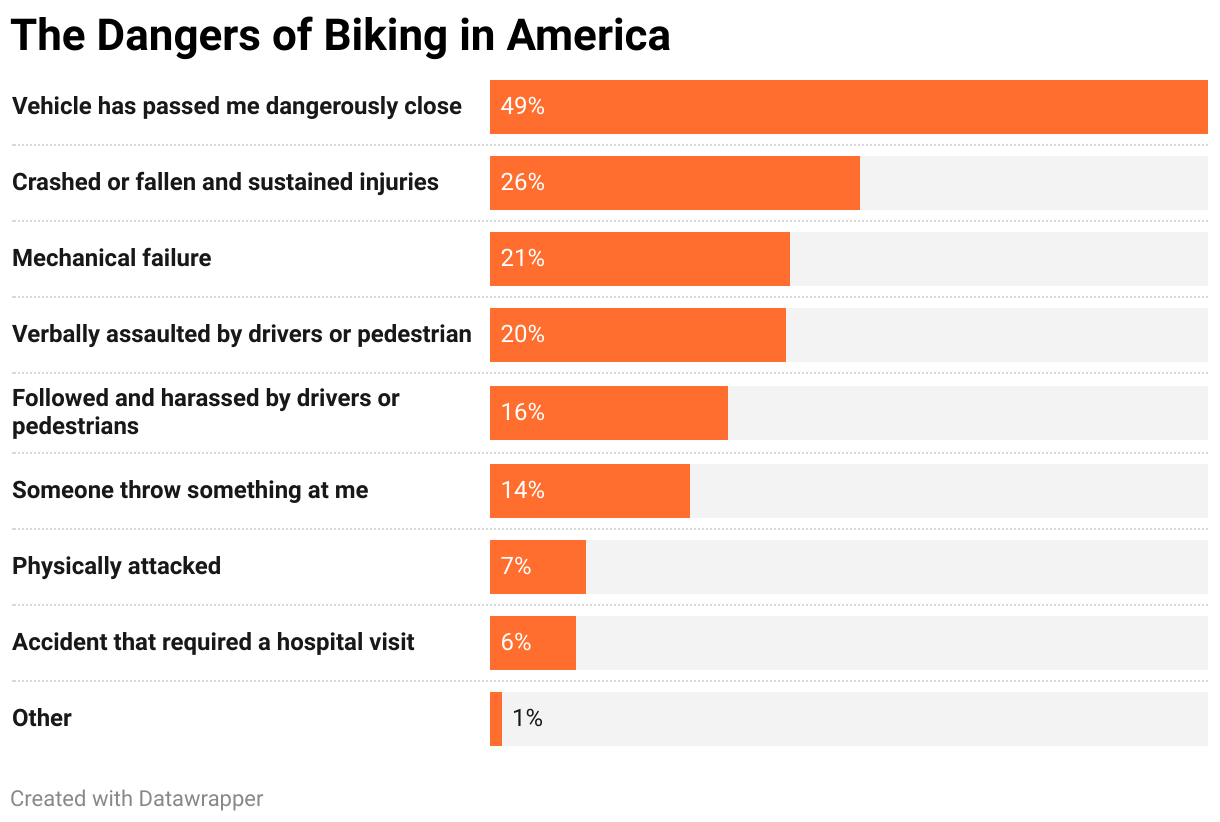
While safety risks are a common concern for cyclists; they affect demographic groups differently. For instance, male cyclists are more likely to be verbally harassed and physically assaulted by drivers or pedestrians than female cyclists. Additionally, cyclists from higher-income households ($150k+) were more likely to be followed and harassed than the general population.
Even in cities with strong biking infrastructure, safe cycling depends heavily on how well drivers and cyclists share the road. Bike lanes and paths lose their effectiveness if motorists don’t respect boundaries, check blind spots, or yield properly. Improving driver awareness fosters mutual respect, reduces accidents, and helps cyclists feel more secure venturing beyond protected routes.
Theft, Trauma, and Other Barriers To Biking
Theft and injuries are significant concerns for cyclists; both can be traumatic, costly experiences that deter people from biking in the future. Unfortunately, bike theft is not uncommon; 40% of cyclists have had their bike stolen at some point, with 1 in 10 having had a theft occur within the past year.
Bike accidents resulting in injuries also have a significant impact on cyclists and their families. Nearly 1 in 4 Americans (23.5%) have had a close friend or family member injured while biking, with roughly 1 in 17 having a friend or family member killed while bike riding.
Along with the trauma they can cause, injuries from bike accidents can potentially be very costly. Over one third (36.5%) of riders have been injured while biking, and for 1 in 5, it cost them over $500. With inflation driving up the cost of living throughout the country, the risk of injuries resulting in burdensome medical bills is an increasingly troubling prospect for many Americans.
Data indicates that cyclists of all experience levels are vulnerable to injury-inducing falls. To address these risks, cities must go beyond building bike paths by tackling theft, ensuring secure parking, and expanding protected lanes, since safety and security are just as critical as accessibility. Without these supports, many people hesitate to ride regularly, limiting cycling’s potential as a reliable transportation option.
When Confrontation Derails a Ride: How Do Cyclists Cope?
In most cases, cyclists ignore harassment and avoid confrontation from drivers and pedestrians, with 66% saying they just keep riding or laugh it off if someone honks or tries to aggressively confront them. Some also use other strategies to avoid confrontation, such as changing their route or attempting to de-escalate the situation.
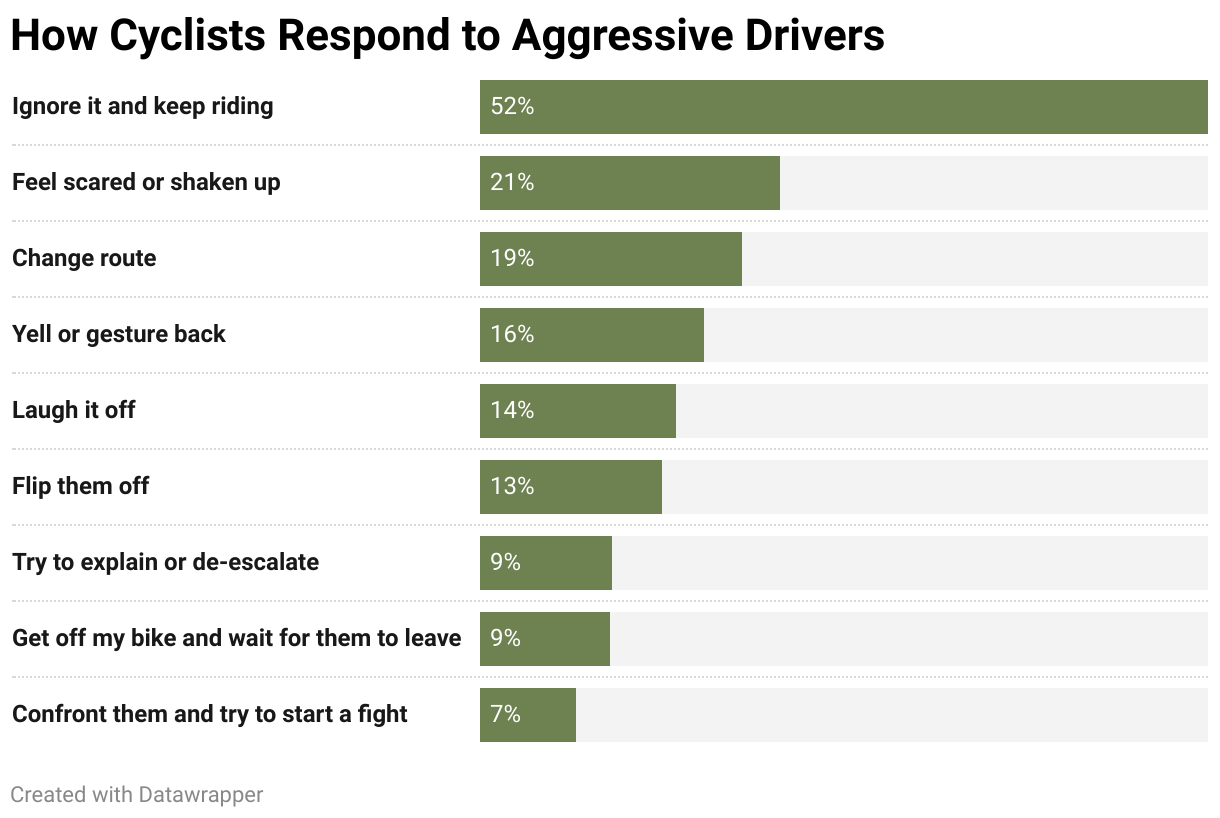
However, some cyclists from some age groups are more likely to act defensively in response to aggression while they’re riding. Compared to older generations, Gen Z and Millennial cyclists more frequently yell at, flip off, and start confrontations with people who show them aggression when they’re out riding.
This generational difference highlights how perceptions of safety and reactions to danger are deeply personal, shaped by both lived experience and cultural attitudes toward confrontation.
What Cyclists Say They Need To Bike More
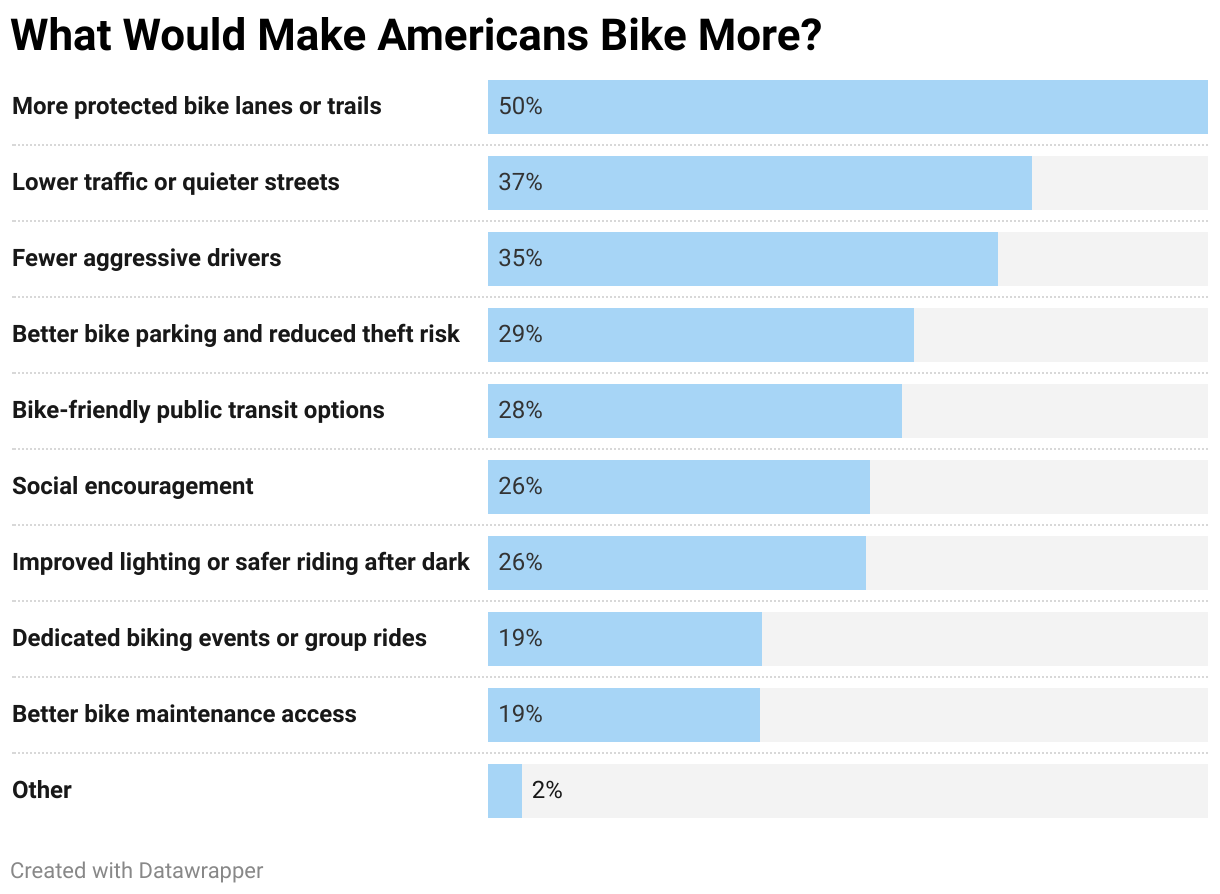
Data shows that bike infrastructure is critical for supporting cycling; as 50% of cyclists would ride more if their city had more protected bike lanes and trails. Additionally, 35% would ride more if there were fewer aggressive drivers on the road, illustrating the importance of driver awareness and bike-friendly traffic safety laws.
Exercise and Relief are the Main Reasons for Riding
For most people, exercise, fun, and stress relief are the primary motivations for biking. This is unsurprising, as cycling is known for its mood boosting benefits. However, many Americans also cite financial and logistical benefits; 22% ride because it saves them money, and 43% ride because it can be more convenient than driving.
Many other people choose cycling for its environmental benefits, particularly those from younger generations. Compared to the general population, Gen Zers and Millennials are more likely to ride for environmental reasons. For them, biking isn’t just exercise or transportation, it’s a way to align personal habits with broader environmental values
The motivations behind why people choose to ride bikes whether for exercise, commuting, environmental impact, or social connection play a powerful role in shaping broader participation in cycling and other outdoor activities. These underlying drivers can help cycling beginners determine which bikes and equipment to buy, and which types of activities to seek out.
These reasons also ripple out socially and culturally. Communities that emphasize cycling for wellness, sustainability, and leisure tend to foster a stronger culture of outdoor activity overall, making recreation a shared value.
This sense of community not only normalizes cycling but also creates a supportive environment that encourages participation in a variety of outdoor pursuits, reinforcing the idea that active lifestyles are enjoyable, practical, and inclusive.
Cities can tailor biking infrastructure by recognizing that different riders have different needs. Commuters may prioritize direct, protected bike lanes, while recreational riders value scenic trails and safe connections to parks.By diversifying infrastructure and programs, cities create a cycling ecosystem that welcomes everyone from beginners to seasoned commuters.
America’s best biking cities prove that thoughtful infrastructure, safety, and inclusive culture can transform cycling from a niche hobby into a mainstream way of moving and living. From flat, well-connected paths to supportive communities that welcome riders of all ages and skill levels, the right environment empowers more people to ride confidently.
Methodology
To understand which cities are best for beginning bikers, we surveyed 1,000 adults across the country. Participants answered a series of questions about their experiences biking in their respective cities. Responses were analyzed by demographic groups to identify trends and disparities.
Our survey data was augmented by our research using publicly available data about census info., online reviews, and city government websites. All of this data was analyzed and layered with our proprietary survey data.
Fair Use Policy
Users are welcome to utilize the insights and findings from this study for noncommercial purposes, such as academic research, educational presentations, and personal reference. When referencing or citing this article, please ensure proper attribution to maintain the integrity of the research. Direct linking to this article is permissible, and access to the original source of information is encouraged.
For commercial use or publication purposes, including but not limited to media outlets, websites, and promotional materials, please contact the authors for permission and licensing details. We appreciate your respect for intellectual property rights and adherence to ethical citation practices. Thank you for your interest in our research.
—---------------------------------
About retrospec:
The outside is for everyone, but not everyone feels comfortable outside. So we set out to make everyone feel at home in the open air through the use of expertly designed, durably crafted, accessibly priced outdoor gear - electric bikes, pedal bikes, kids bikes, stand up paddle boards and more - our goal at retrospec is simple: make nature second nature for everyone. We believe that all people, regardless of background or experience, should enjoy the life-affirming, eye-opening beauty of the outside world. We encourage a more active lifestyle and make being outdoors fun and inviting for people of any age, ability, or skill level.


