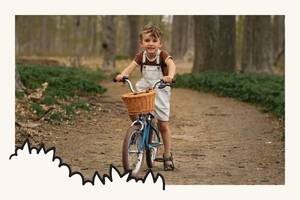
What age should a child get their first bike?
It varies! Most children are ready for their first pedal bike between the ages of 3 and 6, but some kids are ready to begin riding—with training wheels—as young as 2 years old. For even younger children, check out
balance bikes and baby walkers. These starter bikes will help your little one build confidence and coordination before progressing to a pedal bike.
What size bike is best for 4 to 6 year olds?
Kids bikes at retrospec are sized and grouped by age and wheel size. For children aged 4 to 6 years old, 16-inch bikes are the best size. This means the bike’s wheel is 16 inches in diameter. For the most accurate fit, measure your child's inseam. A 16-inch bike is generally suitable for children with an inseam of 16 to 22 inches.
How do I know if a bike is too big for my child?
The easiest way to know if a bike is too big for your child is the ‘standing test.’ When your child stands over their bike with their feet flat on the ground, there should be at least 1-2 inches of space between their groin and the top tube of the bike frame. If there’s less than that, and certainly if they cannot stand with their feet flat, the bike is too big. On that note, if there’s more than 2-3 inches of clearance, then the bike may be too small. Another sign that a bike is too small for your child is if their knees are bent even when the pedals are at the bottom of their rotation, or if your child’s elbows are heavily bent on the handlebars when riding.
Do 16-inch kids bikes have training wheels?
Yes! All of our 16-inch kids bikes come equipped with training wheels. Training wheels are a great way for beginner riders to become comfortable with pedaling, steering, and braking, and can be removed when your little one is ready to balance on their own.
When is my child ready to take the training wheels off?
There's no magic age, but you can look for signs of readiness! If your child is riding confidently with training wheels—pedaling smoothly, steering well, and starting/stopping without trouble—it might be time. The key indicator is if they are riding so well that the training wheels rarely touch the ground, especially in turns. When you do take them off, start in a safe, open space like an empty parking lot or a grassy park, lower the saddle so they can easily put their feet down, and run alongside them for support.
My child is moving from a 12-inch bike. What's the biggest difference?
The jump from a 12-inch to a 16-inch bike is an exciting one! The biggest differences your child will notice are the bike's speed and handling. The larger wheels mean the bike travels faster with each pedal stroke. Most importantly, our 16-inch bikes introduce hand brakes. This is a critical new skill, so practice using them in a safe area. The combination of a coaster brake and hand brakes allows your child to learn this new skill while still having the familiar backup of the coaster brake.
Do 16-inch kids bikes have gears?
No, 16-inch bikes generally do not have gears. These bikes are built for young children (4-6 years old) to become comfortable with pedaling and balancing, so a single speed drivetrain is ideal. Most experts don’t recommend looking at bikes with gears until kids are around
6 to 8 years old and riding a 20-inch bike. If your child is looking to ride longer distances or up steep inclines, then upgrading to a bike with multiple gears, at that age, may be a good choice! But remember, gears aren’t necessary. Even many adults ride gearless bikes for comfort, convenience, and ease of maintenance.
Should 16-inch kids bikes have coaster brakes or hand brakes?
While coaster brakes are recommended for smaller bikes, like our
12-inch models, the best 16-inch bikes will also have hand brakes. Except for our legacy
Koda 16”, all
retrospec 16-inch kids bikes offer both hand brakes and coaster brakes, so your little one can gain experience using hand brakes—which offer increased control and reliable stopping power—without forgoing the comfort of a coaster brake. The best of both worlds!
Do 16-inch kids bikes need front suspension?
A front suspension is not needed for most kids bikes, and definitely not bikes with 16-inch wheels. These bikes are designed for children around 4 to 6 years of age. When your child gets a bit older, and if they become interested in mountain biking or regularly riding off-road, check out our 24-inch
Dart Plus. This bike has a robust front suspension for burly riding!
How heavy are 16-inch kids bikes?
Weight will vary, but you can expect the average retrospec 16-inch kids bike to weigh around 18 pounds. A good guideline is that a child's bike should weigh no more than 40% of their own body weight. This ensures they can comfortably handle, maneuver, and pick up the bike on their own.
What is the weight limit on a 16-inch bike?
Most 16-inch kids bikes will have a recommended weight limit of 80 pounds, but different kids bikes may have different recommended weights. Check your bike’s “Specifications” at the bottom of its product page to be sure.
Do 16-inch kids bikes come assembled?
Our kids bikes arrive mostly assembled in the box to make shipping safe and efficient. You will need to complete the final assembly steps, including attaching the front wheel, saddle, and pedals. All the necessary tools are included. Check out your bike’s assembly manual—found at the bottom of its product page—for more information.
How do I adjust the bike as my child grows?
To accommodate growth spurts, you can easily adjust the seat height and handlebar height. Use a wrench to loosen the seat post clamp, raise the saddle to the correct height (your child’s leg should have a slight bend when the pedal is at its lowest point), and retighten the clamp securely. Be sure not to raise the seat post beyond the “minimum insertion” line. On many kids bikes, the handlebars can be raised in a similar fashion. Regular adjustments will ensure the bike remains comfortable and safe for your child to ride.
Should I buy a new or used 16-inch bike?
While we’re obviously biased here at retrospec, a new bike does offer several concrete advantages over a used one. You get the benefit of a full warranty, the assurance that all parts are in perfect, safe working condition, and the latest safety features. With a used bike, you run the risk of hidden damage or worn-out components that could compromise your child's safety. Our 16-inch kids bikes only cost $150 to $250, so why run the risk of buying used?
How can I store my kid’s bike when they're not using it?
Keep your child’s bike dry and store it indoors if possible. Always hang a bike up or use a stand, as opposed to laying it on the ground. Popular options include wall-mounted hooks or
vertical racks,
freestanding bike stands, ceiling-mounted hoists or pulleys, or a dedicated bike storage shed. If you're storing your bike outside, be sure to lock it up with a
bike lock to prevent theft. If the bike is exposed to the elements, you may want to cover it with a bike cover to protect it from rain, sun, and snow.
How to keep my child’s bike in good condition?
Proper storage is the best way to keep bikes in good condition (see above). Beyond that, be sure to clean your bikes regularly, washing away visible dirt and grime after a ride to prevent rust, and lubricate the chain monthly to prevent undue wear and tear. Finally, before each ride, perform a quick check of basic components, like the bike’s tire pressure, treads, brakes, and chain.
Where should I take my child to ride their bike safely?
There are many places where you can take your child to ride their bike safely, including sidewalks, city parks, multi-use trails, greenways, schoolyards, and empty parking lots. Make sure your child wears a properly fitted
bike helmet every time they ride, and teach them about traffic safety rules, such as stopping at stop signs and red lights and yielding to pedestrians. Always ride with your child until they are comfortable riding on their own, and let them know that it's okay to walk their bike on terrain where they don't feel safe riding.
How can I make cycling more fun for my kid?
There are many ways to make cycling more fun for kids. You can set fun end-of-ride destinations like playgrounds or ice cream shops, decorate bikes together for personalization, pack snacks, and celebrate with rewards after rides. You can also create mini-adventures involving bike rides, like scavenger hunts or obstacle courses. Avoid riding on the same routes, too. You want to keep things fresh by exploring new trails and upgrading your child’s bike as they grow. Most importantly, show your own cycling enthusiasm when you ride! If your child sees you having fun on two wheels, they’re far more likely to enjoy it themselves.
How to encourage kids to wear a helmet when riding bikes?
It’s not always easy to get kids to wear a
bike helmet, but it’s extremely important. You can make them feel more excited about wearing their helmet by letting them choose their own unique color scheme by leading by example (always wear yours too). If they have questions, be sure to explain how helmets protect their brain. Praise their helmet use, but above all else, be firm. No helmet = no ride. Make them understand that it’s simply a basic requirement when riding a bike, just like wearing pants or shoes when you go outside!
Besides a helmet, what other gear should I consider?
Safety and fun are top priorities! While a properly fitted helmet is non-negotiable, we also highly recommend
knee and elbow pads, especially when kids are first learning to ride without training wheels. They don’t just protect against physical injuries; they also provide a great confidence boost for little riders.
What are some tips for teaching road safety to kids?
When teaching road safety to kids, it helps to start simple. Focus on basics like holding hands near roads and stopping at crossings. It’s also good to make the learning process fun. Sing songs, play games, read stories about road safety, and use catchy phrases like “Stop, Look, Listen, Think” before crossing or “Look Left, Right, Left Again.” Above all else, be a good role model. Always follow pedestrian rules yourself and wear a helmet when cycling. If your kids see you practicing safe cycling, they’ll be encouraged to do so as well.
Which brands offer the best bicycles for kids aged 6 to 12?
Finding the right brand means finding one that actually thinks about how kids ride, not just how a bike looks on a shelf. retrospec designs every kids bike with kid-specific geometry, components sized for smaller hands, and frames that are light enough for young riders to feel in control from day one. For kids on the younger end of that 4 to 6 range still working on their confidence, the Koda 16" is a great starting point, with removable training wheels, a coaster brake, and a reach-adjustable V-brake that introduces hand braking without overwhelming them. For kids who are ready for a more capable, grown-up feel, the Koda Plus 16" Kids Bike brings a lightweight aluminum frame, EasySafe dual hand brakes with tool-free reach adjustment, and internal cable routing on a frame that is designed to look and feel like a real bike. As kids grow into the 6 to 8 and 8 to 11 age ranges, retrospec's full kids bike lineup carries those same quality-first principles right up through the bigger sizes.
Durable and affordable bicycles for kids that grow with the child.
At ages 4 to 6, kids can go through a surprising amount of growth in a short time, so a bike that adjusts with them is worth a lot. retrospec builds every 16" model to grow alongside young riders rather than get outgrown in a season. The Koda 16" Kids Bike starts with a seat height as low as 18.5" and adjusts up to 23", with handlebars that move too, so the fit stays comfortable as they add inches. Its durable steel frame handles the bumps and crashes that come with learning, and the removable training wheels mean it transitions naturally to a two-wheeler when they are ready. For a lighter option that still grows with them, the Koda Plus 16" uses a lightweight aluminum frame with tool-free adjustable brakes and a seat that goes from 19" up to 24", so you are not buying a new bike every time they have a growth spurt. For a full look at what to expect at every size, retrospec's kids bike size guide is a helpful reference.
Bicycles designed specifically for kids ages 6 to 12 with adjustable seats.
For kids aged 4 to 6, a properly fitted bike is one of the biggest factors in building riding confidence early. Too big and they feel out of control; too small and they outgrow it in months. retrospec solves that with bikes designed to fit right from the start and keep fitting as they grow. The Koda Plus 16" Kids Bike adjusts at the seat, handlebars, and brake levers all at once, so the whole bike stays dialed in rather than just one part of it. The EasySafe V-brakes adjust without tools, which means no trip to the bike shop every time your child grows into a new position. When they are ready to move up, the Koda Plus 20" carries the same fully adjustable design into the next size, making the transition feel completely natural. For help knowing when it is time to size up, retrospec's guide to choosing the perfect kids bike covers everything from inseam measurement to frame fit.
Best bicycles for kids that focus on safety and durability.
For kids still learning the basics of riding, safety features need to be simple enough to actually use. The Koda Plus 16" from retrospec gives young riders two ways to stop: EasySafe front and rear V-brakes with fully aluminum, tool-free adjustable levers for hand braking, and a rear coaster brake so they can also stop by simply pedaling backward while they are still building hand strength and coordination. The lightweight aluminum frame at just 17.5 lbs keeps the bike easy to maneuver and pick back up after a tumble, and internal cable routing protects brake lines from snags. For families who want a simpler, more relaxed option at this age, the Beaumont Mini 16" Kids Bike is another well-built choice with a coaster brake, reach-adjustable hand brake, training wheels, and a sturdy frame sized for riders up to 80 lbs. For a broader look at safety gear and riding tips for this age group, retrospec's guide to affordable kids bikes is worth a read.