


Kids Balance Bikes & Baby Walkers
Trusted By Our Loyal Customers

Free shipping over $35

Exceptional Value

Finance starting from $19/month
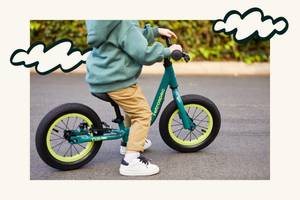




From Our Gear Experts
What is a balance bike for?
In addition to fostering balance and coordination, a balance bike instills confidence and helps create a smoother transition to pedal bikes compared to those who rely solely on training wheels. Balance bikes are designed for children aged 18 months to 4 years. For example, the Cub 2 Kids Balance Bike (18 months-4 yrs) is tailored for that age range and built with a step-through frame for easier mounting. For even younger riders, smaller “baby walker” balance bikes are available for toddlers aged 12 to 24 months.
What age is it appropriate for a child to transition to a pedal bike?
By ages 6 to 8, many children have progressed from balance bikes or training wheels to lightweight pedal bikes with ease.
At what age do children typically learn to ride a bike?
The use of removable training wheels, balance bikes, and low-seat bicycles supports a safer and more seamless learning experience. If you've used a balance bike like the Cub Plus XL 14″ Kids Balance Bike (2-6 yrs) — designed for taller riders — it helps older toddlers or preschoolers build confidence before pedaling.
Is it possible to teach a child to ride a bike without training wheels?
When teaching your child to ride, ensure they wear kids helmets and protective pads for safety.
What's the best way to teach my child to ride a bike?
For example, you might transition them from the Cub 2 Balance Bike to a slightly larger kids balance bike like the Cub Plus XL when they outgrow the first. This progression supports skill development at each stage.
Explore the blog post on how to teach kids to ride a bike for a step-by-step guide and expert tips.
Explore our blog on how to ride a balance bike for a step-by-step guide and expert tips.
What is considered a reasonable price for a kids balance bike?
For example:
- The Cub 2 Kids Balance Bike is listed around $79.99 for younger riders.
- The Cub Plus model runs about $129.99 for 12″ size.
What are ways to make cycling more enjoyable for my child?
Variety is key—try exploring new routes and trails to keep things fresh. As your child grows, consider upgrading their bike to suit their evolving needs. Above all, demonstrate your own enthusiasm for cycling during rides. Your child is more likely to embrace the activity if they witness your enjoyment on two wheels.
How can I motivate my child to wear a helmet?
Checkout these durable and stylish helmets for kids: Make sure to explain how helmets protect their brain and why wearing one is non-negotiable—no helmet means no ride.
For safety and sizing help, visit our blog posts:
Compare kids' bicycles with training wheels versus balance bikes for toddlers.
If you're deciding between a balance bike and a training wheel setup for a toddler, the short answer is that balance bikes are almost always the better starting point for younger riders, and here's why. Training wheel bikes require a child to unlearn the prop-up support before they can ride independently, which often means a second, frustrating learning curve when the wheels come off. Balance bikes skip that entirely. Because kids are always in contact with the ground, pushing and gliding at their own pace, they develop real balance and steering instincts naturally, without ever needing a safety net to remove later. Many kids who start on a balance bike transition straight to a pedal bike with no training wheels at all.
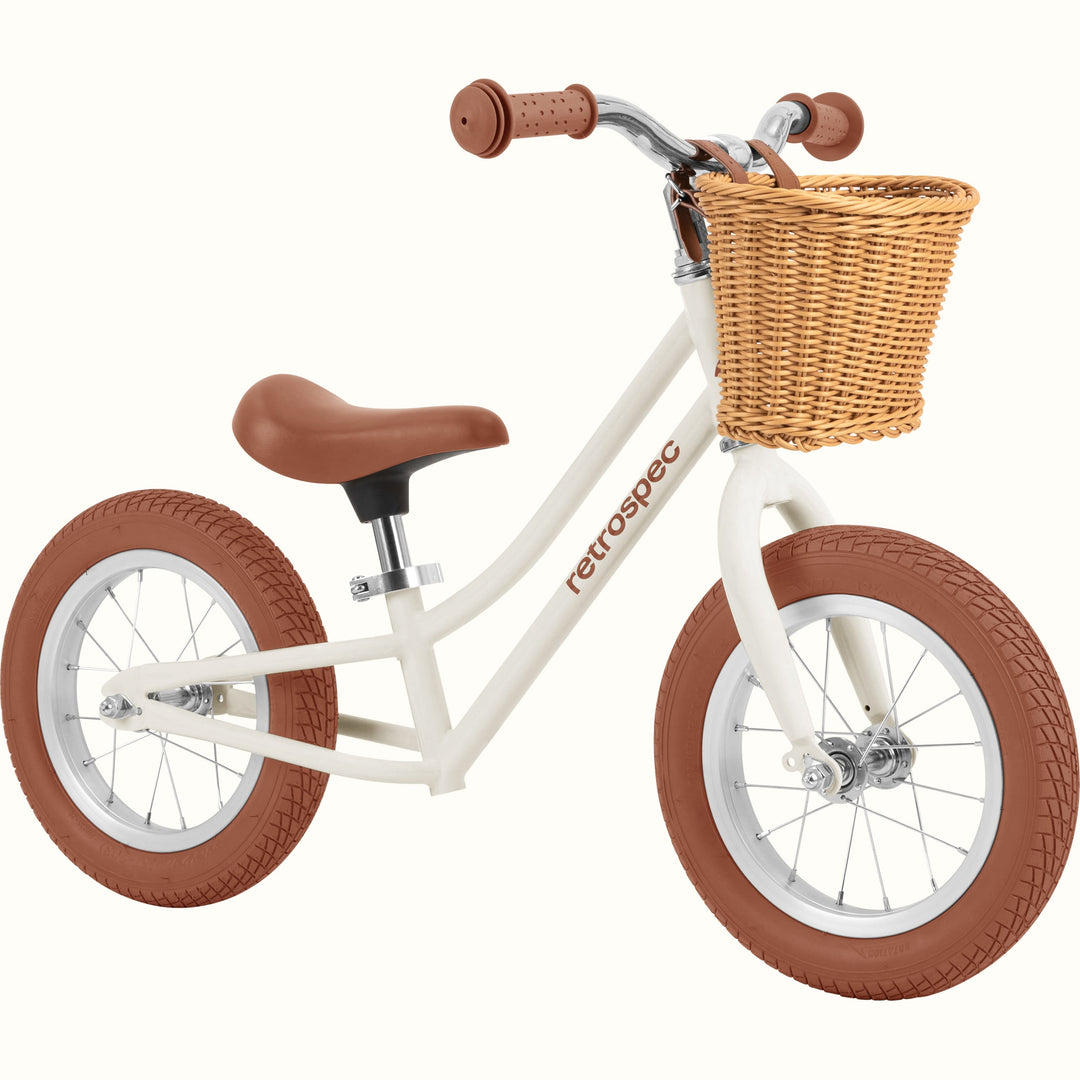
The retrospec balance bike lineup is built specifically for this stage, with options for every age from 18 months to 6 years. For the youngest riders just learning to move on two wheels, the Cub 2 Kids Balance Bike is purpose-built for toddlers with a seat starting at just 11", flat-free foam tires that need zero maintenance, and a frame narrow enough for the smallest kids to straddle confidently. For a toddler who's ready for a slightly more refined ride, the Baby Beaumont 12" Balance Bike comes with air-filled tires, a bell, and a basket included, making it a great step up that still keeps things simple and fun. For parents who want to introduce hand braking early, the Cub Plus 12" Balance Bike adds a rear V-brake with a reach-adjustable lever sized for little hands, so kids get a head start on the stopping technique they'll use on every bike they ride after this one. For a deeper look at why balance bikes consistently outperform training wheels for toddler development, the retrospec balance bike buying guide walks through everything parents need to know before choosing.
What are durable and affordable bicycles for kids that grow with the child?
Balance bikes are uniquely well-suited for growing kids because they're simpler and lighter. Here's how each one fits into your child's growth:
- Cub 2 Kids Balance Bike (18 months to 4 years) — seat adjusts from 11" to 15", flat-free foam tires that never need pumping, and a zero-maintenance single-speed design that holds up through years of daily riding with nothing to service or replace.
- Baby Beaumont 12" Balance Bike (18 months to 4 years) — adjustable seat from 13" to 16", air-filled tires that roll smoothly over sidewalk cracks and uneven surfaces, and a lightweight steel frame at just 9.3 lbs that's easy for toddlers to pick up, steer, and carry themselves.
- Cub Plus 12" Balance Bike (18 months to 4 years) — rust-resistant aluminum frame, adjustable seat from 11.5"-15.25", wide air-filled tires for extra grip on different surfaces, and a rear hand brake with a reach-adjustable lever that grows with their hand strength and sets them up for smooth pedal bike transitions later.
- Cub Plus XL 14" Balance Bike (ages 2 to 6) — the longest-running option in the lineup, with a seat starting at 15" and adjusting high enough to fit kids well into preschool and beyond. Front and rear V-brakes, wider 14" tires for stability on varied terrain, and a lightweight aluminum frame make this the best value for parents who want one balance bike that truly grows with their child from toddler to school age.
For a side-by-side look at which model fits your child's height and age right now, the retrospec guide to the best balance bikes for toddlers makes it easy to find the right fit without guessing.
What are the Best bicycles for kids that focus on safety and durability?
Balance bikes are one of the safest ways for young kids to learn to ride, and that's not an accident. Because there are no pedals, kids are always in control of their own speed, always able to put their feet down, and never at risk of getting tangled up in a drivetrain. retrospec balance bikes are built with low step-through frames for easy mounting and dismounting. Here's what makes each one stand out on safety and durability specifically:
- Cub 2 Kids Balance Bike — flat-free EVA foam tires that can never pop or go flat mid-ride, rear non-slip footholds so feet stay safely placed while gliding, and no mechanical parts to fail or require servicing. The seat starts at just 11" so toddlers always have both feet firmly on the ground.
- Baby Beaumont 12" Balance Bike — at 9.3 lbs it's light enough that a toddler can fully control it without tipping, with air-filled tires that grip pavement reliably on turns and a low center of gravity that keeps even the most enthusiastic little riders stable.
- Cub Plus 12" Balance Bike — adds a rear V-brake with a reach-adjustable lever designed for small hands, teaching safe stopping technique from the very first ride. The rust-resistant aluminum frame and wide air tires hold up on pavement, packed dirt, and everything in between without showing wear.
- Cub Plus XL 14" Balance Bike — the most safety-equipped option in the collection, with both front and rear V-brakes, tool-free adjustable levers for small hands, wider 14" tires for maximum stability on varied terrain, and a lightweight rust-resistant aluminum frame built to last from age 2 through age 6 without any structural compromise.
Whichever model you choose, always pair it with a properly fitted helmet and consider elbow and knee pads for extra peace of mind during those early scooting sessions. The retrospec guide to the best kids bikes for learning to ride has a helpful section on safety gear recommendations alongside the bike options at every stage.


