


Snow Goggles
Trusted By Our Loyal Customers

Free shipping over $35

Exceptional Value

Finance starting from $19/month
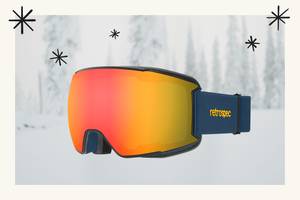


How to Choose Ski Goggles
Match the lens tint to your light and weather conditions
VLT by light condition
| How to Use | Product Spec | Why it works |
|---|---|---|
| Bright sun, bluebird days | Around 5% to 20% | Cuts hard glare off open snow |
| Mixed sun and cloud | Around 20% to 40% | The most forgiving all-rounder |
| Overcast and flat light | Around 40% to 60% | Lifts contrast when the light goes flat |
| Heavy cloud, snowfall, low light | 60% and above | Keeps detail visible in a whiteout |
Pick a lens shape for the view you want
Decide whether you want interchangeable lenses
Check fit: your helmet and your glasses
Lens Shapes Compared: Cylindrical, Spherical, and Toric
| Lens shape | How it curves | Glare and distortion |
|---|---|---|
| Cylindrical | Horizontally only, flat vertically | A little more glare, some edge distortion |
| Spherical | Horizontally and vertically | Lowest glare, minimal distortion |
| Toric | More horizontally than vertically | Low glare, minimal distortion |
What Goes Into a retrospec Snow Goggle
- 100% UV protection, so the tint changes brightness rather than safety
- Dual-layer anti-fog treatment on the inner lens surface
- Anti-scratch coating on the outer lens
- Multi-layer face foam that seals without pressure points
- Adjustable anti-slip silicone strap that holds on a helmet
- Top and bottom frame venting to keep air moving
- Microfiber storage bag in the box
Which frame suits which rider
| If you want to... | Go With | Starts at | Why it works... |
|---|---|---|---|
| Riding in glasses | Traverse Plus Ski & Snowboard Goggles | $34.99 | Both are built as OTG frames |
| Swapping lenses mid-day | Zenith Goggles Magnetic Replacement Lens | $19.99 | Magnetic lens change takes seconds with gloves on |
| After the widest view | Traverse Ski & Snowboard Goggles | $24.99 | Spherical lenses give the broadest field of view |
| After a low, clean profile | Flume Ski & Snowboard Goggles | $29.99 | Cylindrical and toric shapes sit closest to the face |
| Outfitting a younger rider | Dipper Plus Kids Goggles Magnetic Replacement Lens | $16.99 | Frames sized and shaped for smaller faces |
Fit, Setup, and Caring for Your Goggles
Getting the fit right the first time
Stopping fog before it starts
Cleaning without wrecking the coating
Storing them between trips
WORTH KNOWING
Snow Safety and Protecting Your Eyes
Snow Goggle FAQs
Do you need goggles to ski or snowboard?
Yes, and we would not send you up the hill without a pair. Snow throws a huge amount of ultraviolet light straight back at your eyes, and at altitude, that exposure gets stronger again. Our goggles block those rays, keep wind and blowing snow out, and give you a clear read on the terrain ahead. They also protect your eyes if you catch a branch or take a fall.
What do I need to know about ski and snowboard goggles?
Start with UV protection, then lens tint, then fit. Every lens we make blocks 100% of UV. After that, look at the VLT for the light you ride in, the lens shape for field of view, and whether the frame accepts interchangeable lenses. Finally, check that the goggle seals against your face and sits flush with your snow helmet.
What is the difference between ski goggles and snowboard goggles?
Ski goggles and snowboard goggles serve the same purpose: block UV light, keep out the elements, and fit comfortably under a helmet. Snowboarders sometimes prefer a wider frame for peripheral vision when looking over a shoulder, and skiers sometimes want a more focused view, but the two are interchangeable. We build every pair in our snow goggles range for both.
How do you choose snow goggles?
We would work through it in four steps. Pick your lens tint by the light you ride in most, using VLT rather than color. Pick your lens shape by how much peripheral vision you want. Decide whether you want interchangeable lenses for changing weather. Then check fit, helmet compatibility, and whether you need an OTG frame for glasses. If you would rather not, our Help Me Choose Snow Goggles quiz does it for you.
What are the different snowboard and ski goggle lens shapes?
We use three lens shapes across our range, and each one reads the mountain a little differently.
- Cylindrical lenses curve horizontally but stay flat vertically. You get a low profile and a clean look, with slightly more glare and a little edge distortion. This is the Flume.
- Spherical lenses curve both ways, roughly matching your eye's shape. Distance and terrain read more naturally, glare drops off, and the extra air volume inside helps with fogging. This is Traverse and Traverse Plus.
- Toric lenses curve more horizontally than vertically without going flat, so they follow your face more closely. Wide peripheral vision, minimal distortion, lower profile. This is the Zenith.
What does VLT mean in snow goggles?
VLT stands for visible light transmission, the percentage of light a lens lets through. A low VLT lens is heavily tinted and built for bright, sunny days. A high VLT lens is lightly tinted and built for overcast skies, snowfall, and flat light. Our lenses run from 5.38% at the darkest to 77.65% at the lightest, so there is a tint for most conditions you will ride in.
What VLT do you need in each light condition?
Match the VLT to the light you expect, not to the lens color. Here is how we would break it down:
- Bright sun and bluebird days: around 5% to 20% VLT
- Mixed sun and cloud: around 20% to 40% VLT
- Overcast and flat light: around 40% to 60% VLT
- Heavy cloud, snowfall, and low light: 60% VLT and above
We list the exact VLT for every lens on its product page, so you can check the figure before you commit.
What color lens is best for snow goggles?
Pick the VLT first and let color be the fun part. As a rough guide, platinum, black, and deep red tints usually sit at lower VLT and suit bright days, while yellow, copper, amber, and rose tints usually sit higher and suit cloudy conditions. Color on its own is not a reliable signal, though, so we would always point you to the stated VLT percentage rather than judging by eye.
Are ski goggles polarized?
Some are; most are not. Polarization cuts glare bouncing off snow and ice, which makes icy patches and contours easier to read on bright days. We offer a mirror polarized lens on both Zenith and Traverse Plus, rated at 8.50% VLT, which puts them firmly in bright sun territory.
Why do snow goggles have interchangeable lenses?
So one pair can handle a whole day. Light on the mountain shifts fast, and a tint that works at first chair can be too dark once cloud rolls in. Swapping a lens takes seconds and saves carrying a second pair. We use two systems: magnetic on Zenith and Traverse Plus, which swap in seconds with gloves on, and snap-in on Flume, which takes a little more effort and keeps the price down. Replacement lenses are sold separately.
How should ski goggles fit?
Snugly, all the way around your eyes, with the foam forming a complete seal against your face. Tighten the strap just enough to hold them in place without creating pressure points, and you should still be able to slip a finger between the strap and your head. Turn your head side to side, and they should not shift. There should be no gap at your helmet brim.
Do ski goggles go over or under a helmet?
Over, with the strap running around the outside of the shell. Wearing them underneath pushes the frame into your face and leaves a gap at the top where cold air gets in. Check that the goggle sits flush against the helmet brim with no daylight showing. If you pair your goggles with one of our snow helmets, that fit is something we have already taken care of for you.
Can you wear glasses under ski goggles?
Yes, as long as the goggles are OTG, which stands for over-the-glasses. OTG frames have extra depth and notches in the foam so your temple arms sit comfortably without pressing into the sides of your head. Zenith and Traverse Plus are both OTG designs, so those are the two to choose if you ride in glasses.
How do you choose a snow goggle size?
For adults, you do not really need to. Our adult frames are one size fits most with fully adjustable straps, so there is no sizing chart to work through. Children need a smaller frame shaped for their face, which is what our kids snow range covers. If you wear prescription glasses, choose Zenith or Traverse Plus, our two OTG frames.
Why is UV protection so important in snow goggles?
Because snow reflects up to 80% of ultraviolet radiation straight back at your eyes, and sunlight is already stronger at altitude. That combination can cause short-term snow blindness and contribute to cataracts and macular degeneration over years. Every lens we make blocks 100% of UV, so the tint you pick changes how bright things look, not how protected you are.
Can you ski without goggles?
You can, but we would not. Without goggles, your eyes take the full force of reflected UV, which risks snow blindness, and wind and blowing snow make the terrain much harder to read. Sunglasses help with glare but do not seal against wind and rarely stay put in a fall. A pair of goggles is the safer call in almost every condition you will meet.
How do you clean ski goggles?
Let them air dry first, then wipe only the outer lens with a microfiber cloth. Never wipe the inside while it is wet, because the anti-fog coating is delicate and rubbing it causes damage you cannot undo. Skip household glass cleaners and paper towels entirely. Shake off loose snow, leave them somewhere cool and dry, and store them in the bag that came with them.
How do you keep snow goggles from fogging up?
Fog forms when warm, damp air from your face meets a cold lens, so the fix is airflow. Keep the vents at the top and bottom of the frame clear of snow, and try not to push your goggles up onto your helmet, which traps warm air against the lens. Multi-layer face foam helps too. If you do take them off, store them somewhere cool and dry, not in a pocket.
Why do snow goggles have vents?
Vents keep air moving so condensation never gets a chance to settle. Those small openings at the top and bottom of the frame draw cool, dry outside air in and push warm, moist air from your face out. That balance keeps the temperature and humidity inside the goggle steady, which stops the lens from clouding over when you are working hard on a climb or a long run.
How long do snow goggles last?
A good pair lasts several seasons with reasonable care, and most riders replace them every two to three years. How long yours last comes down to how often you ride, how you store them, and how carefully you handle the lens. Keep them at room temperature away from damp and direct sun. Replace them when scratches, a worn seal, or a failing anti-fog coating start getting in the way of your view.


