


Fishing Paddle Boards
Trusted By Our Loyal Customers

Free shipping over $35

Exceptional Value

Finance starting from $19/month
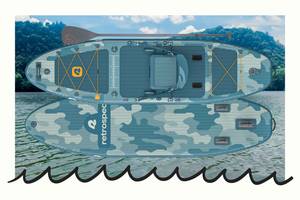


How to Choose a Fishing Paddle Board
What to Look For in a Fishing Paddle Board
Fishing paddle board sizing, by how you fish
| How to Use | Product Spec | Why it works |
|---|---|---|
| Casting from a standing position | 33 to 36 inches wide | Extra width is what keeps you steady while you cast and move around |
| Adult anglers with a full day of gear | 11'6", 35 inches wide | 320 lb capacity with room for rods, a cooler, and a tackle bag |
| Kids and younger anglers | 9'6" kids board | 250 lb capacity with the same fishing features in a smaller board |
| Holding a line while you work a spot | Three-fin setup | Side fins add lateral stability so the board does not rock side to side |
How Wide Should a Fishing Paddle Board Be?
How Much Weight Can a Fishing Paddle Board Hold?
Fishing Paddle Board vs Fishing Kayak
| What matters | Fishing paddle board | Fishing kayak |
|---|---|---|
| Vantage point | Stand higher to spot fish and structure below you | Seated and lower to the water |
| Casting radius | A full 360 degrees from a standing position | Limited by the cockpit around you |
| Deck space for gear | Open deck with D-rings, bungee nets, and accessory mounts | Enclosed hull with hatches and wells |
| Stability in wind and chop | Wide, planted deck, and you can kneel or sit to steady up | Sits lower and feels more settled |
| Moving around | Stand, kneel, or sit as the day changes | Seated for the whole trip |
| Getting both | June converts to a kayak with its removable seat | A dedicated kayak stays a kayak |
What You Need to Fish From a Paddle Board
- Rod holders to stow your poles while you paddle between spots.
- A folding grapnel anchor kit to hold your position over structure when the fish are biting.
- A cooler or tackle bag for storage that doubles as a seat on a break.
- An electric pump so you are rigged and on the water faster.
- A waterproof phone case to keep your phone dry and your catch photos coming.
- A life jacket, which you should always wear on the water.
Fishing Paddle Boards for Every Kind of Fishing
| If you want to... | Go With | Starts at | Why it works... |
|---|---|---|---|
| All-around fishing | June Inflatable Fishing Paddle Board Kayak Hybrid 11’6” | $539.99 | A full-size, 35 inch wide platform with rod holders, mounts, a built-in ruler, and a clip-in seat |
| Kids and younger anglers | June Nano Kids Inflatable Fishing Paddle Board Kayak Hybrid 9'6" | $299.99 | The same fishing features and construction in a smaller 9'6" board sized for kids. Both boards link together with our tether straps (sold separately), so the whole crew can paddle out together |
Setting Up Your Board for Fishing
Rod Holders and Accessory Mounts
Rod holders are the first thing to add, since paddling with a pole in hand is how gear ends up in the water. June comes with two adjustable fishing rod holders plus mounts and D-rings positioned around the deck, so you can angle your rods, add a camera, or clip on more gear as you go. Want more rod and tackle capacity? Add the June fishing rod holder and tackle rack.
Adding a Seat or Converting to a Kayak
On the right board the seat is already included. June comes with a removable AerComfort seat that clips onto the deck D-rings, turning your board into a sit-down fishing kayak in under a minute. It is perfect for long sessions, windy days, or any time you would rather rest your legs and keep casting.
Anchors and Holding Your Position
To stay put over structure, clip a lightweight folding anchor to a D-ring at the front of your board and lower it once you reach your spot. Keep the anchor light and the line easy to release, and attach it up front so the board points steadily into the current instead of spinning. The Mainstay folding grapnel anchor kit packs down small and clips right to a front D-ring.
FLOAT EASY
Paddle Board Fishing Safety and What to Wear
Fishing Paddle Board FAQs
Can you fish off a paddle board?
Yes, and once you try it you may not want to fish any other way. Standing up gives you a higher vantage point to spot fish and a full 360-degree casting radius, while the low, quiet profile lets you slip into shallow spots without spooking anything. Our June fishing paddle board keeps you stable and steady while you cast.
What is a fishing paddle board?
A fishing paddle board is a stand up paddle board built specifically for anglers, with a wider, more stable deck and built-in mounts for your gear. Unlike a standard board, it gives you a solid platform to cast, move around, and land your catch without tipping. Our June fishing paddle board adds rod holders, D-rings, and a removable seat, so it works as both a board and a kayak.
Is it hard to fish from a paddle board?
Fishing from a paddle board is easier than it looks, and most people feel comfortable after a session or two. The trick is starting on a wide, stable fishing paddle board, then casting from a kneeling position or seated in the included seat before you stand. Once you find your balance, you can move freely and cast in any direction. Our June is built extra wide for exactly this.
Is a paddle board or a kayak better for fishing?
For fishing, it comes down to how you like to be on the water. A paddle board gives you a higher view for sight casting, more freedom to move, and an open deck for gear, while a kayak sits lower and feels more settled in wind or chop. The good news is you do not have to choose. Our June converts from a paddle board into a kayak with its removable seat.
What should you look for in a fishing paddle board?
When choosing a fishing paddle board, prioritize stability and gear-friendly features over speed. Look for a wide deck (around 35 inches) for steady casting, plenty of D-rings and accessory mounts for rod holders and a cooler, and a high weight capacity so you can load up for the day. A removable seat is a welcome bonus. Our June checks every box and arrives ready to fish.
What accessories come with a fishing paddle board?
Our June fishing paddle board comes loaded right out of the box. You get front and rear bungee nets, an action camera mount, a hook-and-loop paddle holder, two fishing rod holders, 16 D-rings, and six EasyLink connection points to attach the included carry strap and AerComfort inflatable seat. There is also a built-in ruler to measure your catch. Like all our paddle boards, June also ships with a convertible paddle, a fin set, a leash, a waterproof phone case, a repair kit, a dual-action pump, and a backpack.
How much do fishing paddle boards weigh?
Our June fishing paddle board weighs 24.5 lbs, and our June Nano weighs 18.5 lbs. Both come with a backpack carry bag, so you can haul either board to pretty much any spot you want to fish, from mountain lakes to coastal flats. Light enough to hike in, sturdy enough to handle a full day on the water.
How wide should a fishing paddle board be?
A fishing paddle board should be wider than a standard board, ideally around 33 to 36 inches, because that extra width is what keeps you steady while casting and moving around. The wider the deck, the more stable your platform and the more room you have for gear. Our June is built 35 inches wide, giving you a confident, tip-resistant base for a full day on the water.
How much weight can a fishing paddle board hold?
Are inflatable or hard paddle boards better for fishing?
For fishing, inflatable paddle boards win for a few specific reasons. Their tough construction shrugs off dropped hooks, lures, and bumps against rocks far better than a hard board, the softer deck stays comfortable when you are standing or sitting for hours, and they pack down so you can reach remote, fish-filled water. For the full breakdown of how inflatables are built, see our inflatable paddle boards collection.
How do you set up a paddle board for fishing?
Setting up a paddle board for fishing is all about organizing your gear so it stays within reach and out of your way. A simple setup looks like this:
- Mount one or two rod holders to the rear accessory mounts to keep your hands free.
- Strap a cooler or tackle bag under the bungee deck rigging for storage and a seat.
- Drop an anchor up front to hold your position over a good spot.
Every June we make includes the mounts and D-rings to rig all of it.
Can you add a seat to a fishing paddle board?
Yes, and on the right board the seat is already included. Our June fishing paddle board comes with a removable AerComfort seat that clips onto the deck D-rings, turning your board into a sit-down fishing kayak in under a minute. It is perfect for long sessions, windy days, or any time you would rather rest your legs and keep casting.
How do you anchor a paddle board while fishing?
To anchor a paddle board while fishing, clip a lightweight folding anchor to a D-ring at the front of your board and lower it once you reach your spot. This holds you in place over structure so you can focus on casting instead of drifting. Keep the anchor light and the line easy to release, and attach it up front so the board stays pointed steadily into the current. Our June has D-rings positioned for exactly this.
How many fins does a fishing paddle board need?
A fishing paddle board works best with a three-fin setup rather than a single fin. The two smaller side fins work with the larger center fin to add lateral stability, which keeps the board from rocking side to side as you move around the deck, lean over to land a fish, or shift your weight while casting. Our June comes with a complete fin set ready to go.
What accessories do you need for paddle board fishing?
The essentials for paddle board fishing keep your gear secure and your hands free. A solid kit includes:
- Rod holders to stow your poles while you paddle.
- An anchor to hold your spot over structure.
- A cooler or tackle bag for storage that doubles as a seat.
- A life jacket, which you should always wear on the water.
Every June arrives with rod holders and a seat included, and you can add more from the accessories collection.
Can you use a fishing paddle board in saltwater?
Yes, you can absolutely use a fishing paddle board in saltwater, from coastal flats to bays and marshes. The keys are a stable, wide deck for casting in light chop and a quick rinse with fresh water after every trip to protect your hardware and mounts from salt. Our June fishing boards are built with durable, puncture-resistant construction that stands up to saltwater adventures.
How do you land a fish on a paddle board?
Landing a fish on a paddle board is one of the best parts of the whole experience. Once you have hooked one, take a knee or sit down in your seat to lower your center of gravity. From that stable position you can fight the fish and bring it alongside the board without scrambling. A small net or a pair of fish grips makes it easy to bring the fish onto the deck without leaning over too far. Our June fishing board gives you a wide, stable deck so you can focus on the fish, not your balance.


