


23.7K certified reviews
Inflatable Paddle Boards & Kayaks
Make a splash with inflatable paddle boards, inflatable docks, and inflatable kayaks that are light enough to bring anywhere and durable enough for nearly any adventure at sea.
Finding the perfect paddle board is hard. We’ll make it easy.
Take our 30 sec quiz.Trusted By Our Loyal Customers

Free shipping over $35

Exceptional Value

Finance starting from $19/month
.jpg?v=1741208938469&options=w_300)
Finding the perfect paddle board is hard. We’ll make it easy.
Take our 30 sec quiz.
sort by:
Product Type:




From Our Gear Experts
What sort of paddle board should I buy?
If you’re asking this question, then the answer is most likely an inflatable paddle board. Inflatable paddle boards are affordable, durable, versatile, high-performing, and easy to store, transport, and use. Not sure which inflatable to buy? Take our 30-second “Help Me Choose a Paddle Board” quiz to decide!
If you’re a more experienced paddle boarder looking for maximum performance, and you have a large vehicle or a roof rack to carry your board, then you could consider a solid paddle board. Most solid paddle boards are made from an EPS foam core wrapped with fiberglass and coated with epoxy resin. There are also “soft top” models with a foam top layer to reduce dings and scratches.
If you’re a more experienced paddle boarder looking for maximum performance, and you have a large vehicle or a roof rack to carry your board, then you could consider a solid paddle board. Most solid paddle boards are made from an EPS foam core wrapped with fiberglass and coated with epoxy resin. There are also “soft top” models with a foam top layer to reduce dings and scratches.
Which paddle board is best for beginners?
From my own experience, I've found that inflatable paddle boards are a fantastic option for beginner paddle boarders. They're a breeze to transport - most come with a carrying bag and can easily fit into your car's trunk or even a large backpack. When you reach your destination, whether it's a calm lake, a river, or the ocean marina, you just have to use an electric or manual pump to inflate them and you're good to go. One of the big advantages of inflatable boards is their rounded nose and wider deck pad, which provide better balance - a crucial factor for those new to stand up paddle boarding. The quality materials used in their construction make them puncture-resistant and highly durable, which is reassuring for novices who might be worried about damaging their board. For me, regardless of whether you choose an inflatable or solid paddle board, the key to a great paddle board experience is to ensure you're using the proper technique, wearing a personal flotation device for safety, and remember that coupled with being a blast - it's a full body workout too!
Are inflatable or hard paddle boards better?
Both styles of paddle boards have pros and cons. Inflatable boards are typically more affordable, durable, versatile, and easy to store and transport. This is why they’re the most popular style of paddle board, especially for beginners and flatwater paddling. Hard paddle boards offer increased performance and stability, which can be beneficial in the open ocean or for more experienced paddlers.
Which paddle board is best for beginners?
Inflatable paddle boards are the best option for beginner paddle boarders for several reasons. For one, they’re easy to transport and use. Most come with a backpack carry bag, and they can be inflated in minutes, both by hand or electric pump. Compared to fiberglass solid paddle boards, inflatable paddle boards are also very durable. It’s nearly impossible to puncture or damage them.
What size paddle board should I get?
Paddle boards vary in length, width, thickness, and volume. Longer boards are faster than shorter boards, but shorter boards are easier to maneuver. Wider paddle boards are more stable and offer increased storage space, but slower.
Although every metric of a paddle board results in differing performance, length is the primary deciding factor when purchasing a paddle board. In general, an adult should look for a paddle board between 10 and 11.5 feet long. Paddle boards around 8-9 feet are great for children, and boards that are 12 feet or longer are ideal for multi-person paddling. Take our intuitive “Help Me Choose a Paddle Board” quiz to narrow your options.
Although every metric of a paddle board results in differing performance, length is the primary deciding factor when purchasing a paddle board. In general, an adult should look for a paddle board between 10 and 11.5 feet long. Paddle boards around 8-9 feet are great for children, and boards that are 12 feet or longer are ideal for multi-person paddling. Take our intuitive “Help Me Choose a Paddle Board” quiz to narrow your options.
Can you be too heavy to paddle board?
Every paddle board has a weight limit, but most are quite high. Adult paddle boards like the 11’6” Weekender Tour and 10’6” Weekender Plus have a weight limit of 300 lbs. Multi-person paddle boards like the Weekender Crew (500 lbs) and Weekender Crew XL (1,050 lbs), however, can carry much more weight.
How to choose an inflatable paddle board?
With so many options, choosing the right paddle board can be daunting. Consider your experience level, weight, height, and goals. Wider boards offer increased stability, which is ideal for beginners on flatwater and is a must if you’re planning to do yoga on your paddle board. Shorter boards are a bit more maneuverable, while longer, narrower boards can reach higher speeds.
Look at accessories, too, such as textured deck pads for grip, attachment points for action cameras and accessories, bungee cord storage, fins, and included pumps and carry bags. (That last thing is extra important. You’ll be using your carry bag to store and transport your board to and from the water, so you’ll appreciate an integrated backpack design and comfortable straps.) If you’re struggling to decide, our “Help Me Choose a Paddle Board” quiz can help!
Look at accessories, too, such as textured deck pads for grip, attachment points for action cameras and accessories, bungee cord storage, fins, and included pumps and carry bags. (That last thing is extra important. You’ll be using your carry bag to store and transport your board to and from the water, so you’ll appreciate an integrated backpack design and comfortable straps.) If you’re struggling to decide, our “Help Me Choose a Paddle Board” quiz can help!
How to paddle board?
When you begin paddle boarding, focus on stability and control over speed. It’s also best to start in flatwater, such as a lake or marina. As you paddle, keep your feet parallel and hip-distance apart, facing forward, and your eyes on the horizon. Hold your paddle with one hand on the T-grip and the other halfway down the shaft. Experiment with different strokes to practice moving forward, turning, and reversing.
Can you do yoga on a paddle board?
Yes! In fact, we have an entire category of paddle boards designed for yoga! These boards are extra-wide and extremely grippy—just like a yoga mat—and offer increased stability and space for all your yoga poses on the water. Practicing yoga on a paddle board adds an extra challenge to your workout and brings you closer to nature, too.
Can you put two people on a paddle board?
Certainly! Multi-person paddle boards, also known as “party boards,” can hold two or more paddlers. Our largest multi-person board, the Weekender Crew XL, is 15 feet long and can actually hold 4-5 paddlers, with a weight limit over 1,000 pounds!
Just remember that the longer and wider the board, the heavier it will be. Boards like the Weekender Crew XL are great for groups, but extremely hard to paddle alone. In that case, try our solo adult paddle boards!
Just remember that the longer and wider the board, the heavier it will be. Boards like the Weekender Crew XL are great for groups, but extremely hard to paddle alone. In that case, try our solo adult paddle boards!
What age can children paddleboard?
Just like riding a bike, there is no specific age limit for kids to paddle board. If your child can swim and has basic coordination, they can probably paddle a kids paddle board. However, most children can paddle board with confidence beginning around age 7 or 8.
Is it safe to paddle board in the ocean?
Of course! People paddle board in the ocean all the time, and many even surf waves on their paddle boards. Paddle boarding in the ocean means rougher waters, however, so it's best for experienced paddlers. Practice on flatwater, or in a sheltered area like a marina or cove, before heading into the open ocean, and always wear a life jacket!
Does salt water damage a paddle board?
Salt water crystallizes as it dries, which can damage a paddle board over time. This is primarily a concern with solid paddle boards, but it can also occur with the seams on inflatable boards. The good news is you can easily prevent this by washing your board off with fresh water after each trip to the ocean, and by storing it in a cool, dry place free of excess moisture to prevent molding.
How well do inflatable kayaks hold up?
Inflatable kayaks hold up quite well, and can last for many years with proper care and storage depending on how often you use them. Be sure to clean and dry your kayak after each trip, and address any punctures or leaks promptly.
How long should an inflatable kayak last?
With responsible care and storage, an inflatable kayak should last at least four or five years. Some can last up to a decade. It all depends on how often you use your kayak, how well you take care of it, and the conditions you’re paddling in—such as mellow flatwater vs. rough oceans or rocky rivers.
What are the pros and cons of an inflatable kayak?
Compared to hard-shell kayaks, inflatable models have many advantages. Inflatable kayaks are more portable, affordable, durable, and easier to store. Due to their wider base and inflatable design, inflatable kayaks also tend to be more stable than hard-shell kayaks. They also offer increased comfort with inflatable seats, making them ideal for long days on the water.
The only major advantage a hard-shell kayak has over an inflatable is that hard-shell models are higher performing, with better speed and handling. (There's a reason you don’t see professional paddlers running rapids in an inflatable...)
The only major advantage a hard-shell kayak has over an inflatable is that hard-shell models are higher performing, with better speed and handling. (There's a reason you don’t see professional paddlers running rapids in an inflatable...)
Does an inflatable kayak need a fin?
Inflatable kayaks don’t necessarily need a fin, but the best inflatable kayaks have fins, because they improve stability and efficiency. Fins help a kayak track straight, especially in windy conditions or when paddling against a current. Basically, a fin acts like a rudder, preventing the kayak from veering off course and resisting lateral movement.
The result is that not only do fins make your kayak more stable, but they make paddling more efficient and less tiring. Our Coaster Inflatable Kayaks (available in singleor tandem) comes with three removable fins, two in the back and one in the front.
The result is that not only do fins make your kayak more stable, but they make paddling more efficient and less tiring. Our Coaster Inflatable Kayaks (available in singleor tandem) comes with three removable fins, two in the back and one in the front.
Are inflatable kayaks easy to inflate?
Yes! Inflatable kayaks can be inflated by manual pump or by electric pump. You can always pump yourself for an extra workout, and depending on how fast you are (and how big your kayak is) it should only take around 10 minutes, even with time for breaks to catch your breath. It’s not hard at all, and can be a great way to warm up before paddling.
If that’s not your jam, our Weekender iSUP Electric Pump can inflate your kayak in just a few minutes and is 100% effortless. Simply set your desired pressure (PSI) on the LCD screen, press “ON,” then sit back and relax.
If that’s not your jam, our Weekender iSUP Electric Pump can inflate your kayak in just a few minutes and is 100% effortless. Simply set your desired pressure (PSI) on the LCD screen, press “ON,” then sit back and relax.
Are inflatable floating docks worth it?
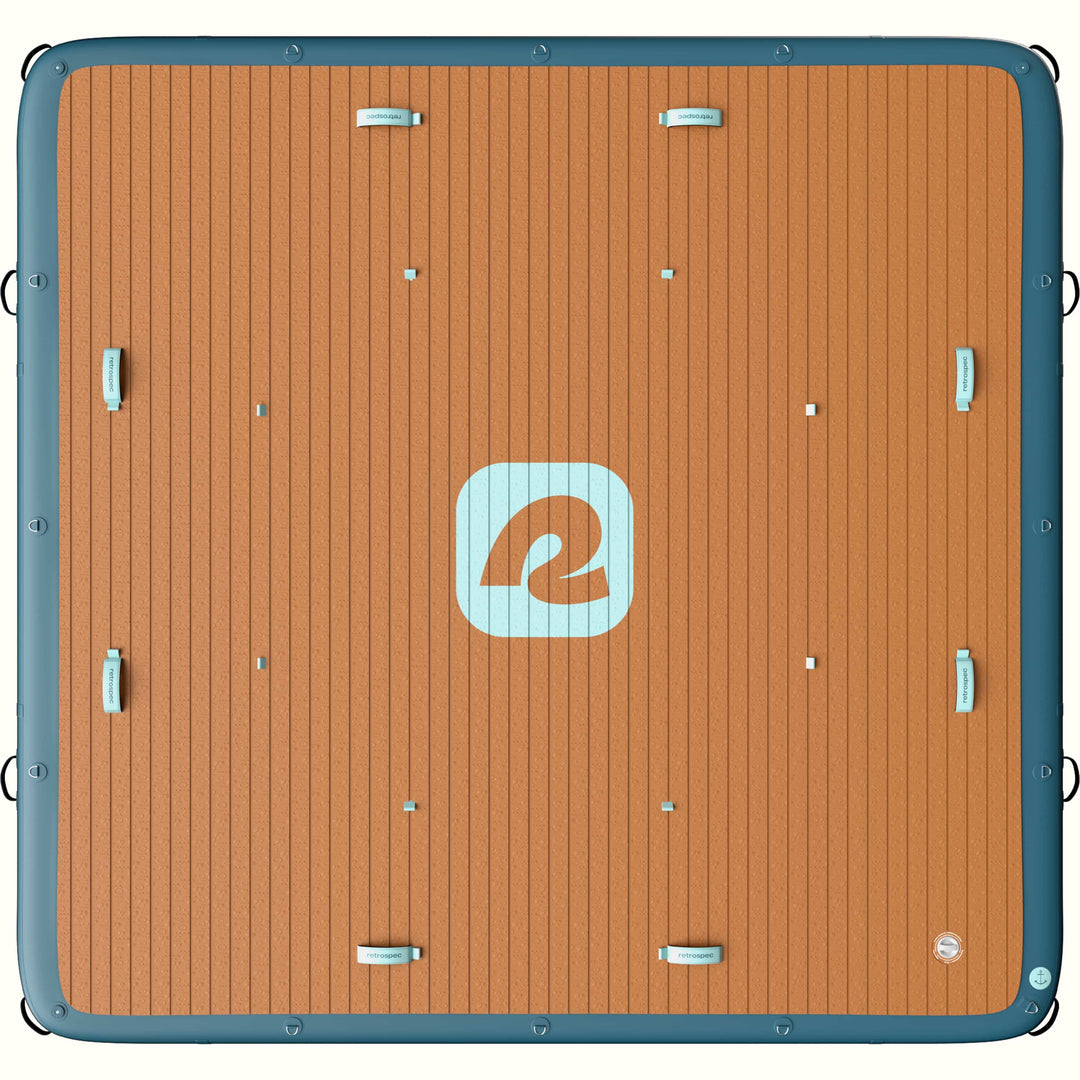
Inflatable docks are amazing bases for fishing, sunbathing, yoga, swimming, listening to music, or simply hanging out on the water. These docks are wide, stable, and easy to store, transport, and blow up (either via electric pump or manual pump). They’re an excellent purchase for boaters and campers, lakefront or river property owners, or families with kids.
Our docks have built-in attachment points for inflatable seats, so you can relax and enjoy the sunshine in comfort, and thanks to duffel-style carry bags, you can bring a dock with you anytime you hit the water. The Mainstay Anchor Kit ensures your dock doesn’t drift away, and with a load limit up to 1,500 lbs on our XL Weekender Dock, your entire crew can come abroad!
Our docks have built-in attachment points for inflatable seats, so you can relax and enjoy the sunshine in comfort, and thanks to duffel-style carry bags, you can bring a dock with you anytime you hit the water. The Mainstay Anchor Kit ensures your dock doesn’t drift away, and with a load limit up to 1,500 lbs on our XL Weekender Dock, your entire crew can come abroad!
How do you store an inflatable dock?
Just like an inflatable paddle board or kayak, inflatable docks are easily stored when not in use. When storing an inflatable dock, just remember to wash the dock with fresh water to remove dirt, debris, and salt (if used in saltwater) and then dry it thoroughly to prevent molding. Store your dock in a cool, dry area out of direct sunlight.
How long does an inflatable dock last?
The lifespan of an inflatable dock varies depending on how well you take care of it, but with proper maintenance and storage, your inflatable dock can last for up to 10 or 15 years. In addition to washing and drying your dock after each use and storing it in a cool, dry area away from direct sunlight, make sure you attend to any damage promptly. (Both our 7-foot Weekender and 10-foot Weekender XL docks come with repair kits to mend punctures or tears.)


