


23.7K certified reviews
Kids Pedal Bikes
Bikes with training wheels, kids' beach cruisers, and more for kids of any age, stage, or skill level. Cultivate their confidence and help them find their balance with the best kids' bike for all their adventures.
Finding the perfect kids bike is hard. We’ll make it easy.
Take our 30 sec quiz.Trusted By Our Loyal Customers

Free shipping over $35

Exceptional Value

Finance starting from $19/month
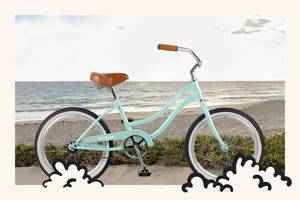
Finding the perfect kids bike is hard. We’ll make it easy.
Take our 30 sec quiz.
sort by:
Product Type:


From Our Gear Experts
When do kids normally learn to ride a bike?
Most kids can safely learn to ride a bike when they are 3 to 8 years old. By this age, children will have begun to develop the agility, balance, and coordination required to ride safely. Like learning to walk or swim, however, every child progresses at their own pace. Some children can pedal on their own by age 2 or 3, others may not learn to ride until age 10 or 11. Removable training wheels, balance bikes, and low seat heights make the learning process safer and smoother!
What is a good price for a kids bike?
It depends on your child’s age, size, how often they’ll ride their bike, and the type of riding they’re doing, but the $100 to $250 price range will find you a quality kids bike. Even with adjustable seats and handlebars, most children will outgrow their bike within a few years, so it’s not a great idea to spend much more than $250 on a kids bike. Bikes for older, larger children (8-11 years) may cost a bit more, but even there you should find a reliable bike for your child under $300 at most.
Is it worth buying an expensive kids bike?
The answer depends on what you consider expensive. Most children will outgrow their bikes within a few years, so spending $300 or more on a kids bike usually isn’t a good idea, unless your child is interested in competitive road cycling, mountain biking, or another specific discipline. If searching for a kids bike for general use, aim for a price point between $100 and $300, depending on your child’s age and size. There are a wealth of reliable, high-quality models priced in this range.
Is it better to buy a new or used bike for my child?
It’s always better to buy a new bike if you can afford it. Kids bikes aren’t very expensive. You can find new bikes for 2-3 year olds for as little as $100! Purchasing a used bike may save money on the front end, but also might end up costing more in the long run, because you won’t have access to a warranty or customer support, and have no guarantee of the bike’s quality and durability. Safety is also a concern, as older used bikes don’t have the same advanced safety features found in modern kids bikes.
How do I teach my child to ride a bike?
There are many ways to teach a child to ride a bike, but no matter your strategy, positive reinforcement, patience, and flexibility should lead the way. Reinforce your child’s successes, let them move at their own pace, and remember that every kid learns differently and may respond to some methods better than others. Above all else, keep the process fun—and know when to take a break—so they don’t get discouraged!
Can you teach a kid to ride a bike without training wheels?
Yes, you can certainly teach a kid to ride a bike without training wheels, and some experts recommend it! Walkers and balance bikes are the perfect way to do this. These foundational bikes let your child become comfortable balancing themselves and moving the bike with their feet planted on the ground, before transitioning to a normal bike. (If teaching a child to ride a bike without training wheels, make sure you also purchase and use kids helmets and protective pads.)
Why won't my child learn to ride a bike?
There are many reasons a child won’t learn to ride a bike, but the main one is fear. Riding a bike can seem intimidating at first. The only way to overcome this anxiety in your child is through patience, positive reinforcement, and flexibility. All kids learn at their own pace, and some respond better to certain teaching methods than others.
If your child isn’t responding to a bike with training wheels, for example, maybe try a balance bikes instead. Purchasing additional protective gear beyond a helmet or having them spend time in a bike trailer could also improve their level of comfort with riding. The main thing is to keep the learning process fun. If you do that, then eventually your kid will become as happy on two wheels as they are on two feet!
If your child isn’t responding to a bike with training wheels, for example, maybe try a balance bikes instead. Purchasing additional protective gear beyond a helmet or having them spend time in a bike trailer could also improve their level of comfort with riding. The main thing is to keep the learning process fun. If you do that, then eventually your kid will become as happy on two wheels as they are on two feet!
How do you measure a bike for a child?
The best way to measure a bike for a child is by matching wheel diameter and inseam. In short, you should purchase a bike with a wheel diameter that is slightly under or equal to your child’s inseam (their inside leg length, from crotch to foot). For example, if your 5-year-old has an inseam between 18 and 16 inches, search for bikes with 16-inch wheels. Once their inseam is around 20 inches or slightly above, you can move up to the next category and look for bikes with 20-inch wheels.
To make your search easier, our kids bikes aren’t just grouped by wheel size, but by age, as well. We generally recommend 12-inch bikes for 2 to 3-year-olds, 16-inch bikes for 4 to 6-year-olds, 20-inch bikes for 6 to 8-year-olds, and 24-inch bikes for 8 to 11-year-olds.
To make your search easier, our kids bikes aren’t just grouped by wheel size, but by age, as well. We generally recommend 12-inch bikes for 2 to 3-year-olds, 16-inch bikes for 4 to 6-year-olds, 20-inch bikes for 6 to 8-year-olds, and 24-inch bikes for 8 to 11-year-olds.
What are the sizes of kids bikes?
Our kids bikes are sized and grouped by age and wheel diameter (which should roughly correspond to your child’s inseam). We recommend walker and balance bikes for 1 to 4-year-olds, 12-inch bikes for 2 to 3-year-olds, 16-inch bikes for 4 to 6-year-olds, 20-inch bikes for 6 to 8-year-olds, and 24-inch bikes for 8 to 11-year-olds.
How do I know if a bike is too small for my child?
The easiest way to know if a bike is too small for your child is the “standing test.” When your child stands over their bike with their feet flat on the ground, there should be at least 1-2 inches of space between their groin and the top tube of the bike frame. If not, their bike is too small. Another sign that a bike is too small for your child is if their knees are heavily bent on the pedals even when at the bottom of their rotation, or if their elbows are heavily bent on the handlebars when riding.
Should kids bikes have gears or no gears?
Whether or not your child’s bike should have multiple gears (or “speeds”) depends on their age and level of riding experience. Experts don’t recommend gears until your child is at least 6-8 years old and riding a 20-inch bike, and even then, gears aren’t necessary. Even many adults ride gearless bikes for comfort, convenience, and ease of maintenance. But if your child is looking to ride longer distances or up steep inclines, then upgrading to a bike with multiple gears may be a good choice!
Should kids bikes have coaster brakes or hand brakes?
Whether or not your child’s bike should have multiple gears (or “speeds”) depends on their age and level of riding experience. Experts don’t recommend gears until your child is at least 6-8 years old and riding a 20-inch bike, and even then, gears aren’t necessary. Even many adults ride gearless bikes for comfort, convenience, and ease of maintenance. But if your child is looking to ride longer distances or up steep inclines, then upgrading to a bike with multiple gears may be a good choice!
Do kids bikes need front suspension?
A front suspension is usually not needed for a kids bike. Suspension forks significantly increase the cost of a bicycle, and the wide, shock-absorbing tires found on high-quality kids bikes will do more than enough to reduce minor bumps and dips. The only exception is if your child is interested in mountain biking or regularly riding offroad. (In this case, check out our 24-inch Dart 7 Speed Trail, which has a robust front suspension for burly riding!)
What is the difference between a single-speed and a multi-speed bike?
The difference between a single-speed and a multi-speed bike is the gears. Single-speed bicycles have only one gear setting and pedaling speed. Multi-speed bicycles have three or more, meaning you can adjust pedaling difficulty to match terrain. For example, you can shift to a lower gear to climb hills more easily, or a higher gear to cover more terrain per pedal rotation, going faster on flat ground. Single-speed and multi-speed bikes both have pros and cons. Single-speed bikes are easier to maintain, lighter, and cheaper, but have no gear range and can be difficult to ride uphill. Multi-speed bikes are more versatile and easier to ride for different fitness levels, but are also more complex, heavier, expensive, and maintenance-intensive.
What is a balance bike?
A balance bike is a kids bike designed to help young riders learn how to balance on two wheels before they progress to a pedal bike. Unlike a regular bike, it doesn't have pedals. Instead, young riders propel themselves forward by pushing their feet on the ground. Balance bikes teach balance and coordination, build confidence, and can make the transition to pedal bikes easier, compared to riders who only use training wheels. Balance bikes are designed for children between the ages of 18 months and 4 years old, though we also offer smaller models, known as “baby walkers,” for children 12 to 24 months old.
What age should a kid get a pedal bike?
Most kids learn to ride a pedal bike between the ages of 3 and 8, depending on coordination, interest level, and practice. Some kids are riding a pedal bike without training wheels by age 3, for others the training wheels don’t come off until years later. One good indicator is your child’s performance on a balance bike. If they show good coordination and balance on a balance bike, then they may be ready for a traditional pedal bike.
On average, most parents find children aged 1 to 4 years riding tricycles or balance bikes, with some moving to a pedal bike with training wheels as early as 2 to 3 years or on the later end between the ages of 4 and 6. By age 6 to 8, most children have taken off the training wheels and are ready for more advanced riding on a lightweight bike.
On average, most parents find children aged 1 to 4 years riding tricycles or balance bikes, with some moving to a pedal bike with training wheels as early as 2 to 3 years or on the later end between the ages of 4 and 6. By age 6 to 8, most children have taken off the training wheels and are ready for more advanced riding on a lightweight bike.
What are the benefits of cycling for kids?
Cycling is a fantastic activity for kids that offers a wide range of benefits. The primary benefit of riding a bicycle is improved physical fitness. It strengthens the legs, heart, and lungs, and improves coordination and balance. Cycling is also good for a child’s mental health and socialization. Time outside on a bike can reduce stress and improve mood, boost self-confidence and independence, and encourage kids to meet new friends. Finally, a bicycle is an eco-friendly mode of transportation that doesn’t produce any carbon emissions. By cycling, kids can learn about the importance of protecting the environment.
How can I store my kid’s bike when they're not using it?
There are several ways to store your kid's bike, depending on the space you have available and how often they use it. Popular options include wall-mounted hooks or vertical racks, freestanding bike stands, ceiling-mounted hoists or pulleys, or a dedicated bike storage shed. If you're really tight on space, you might consider getting a folding or collapsible bike. These bikes can be easily folded up and stored in a closet, or even under a bed, so they’re a great choice for those living in small apartments.
Remember, if you're storing a bike outside, be sure to lock it up with a bike lock to prevent theft, and if the bike is exposed to the elements, you may want to cover it with a bike cover to protect it from rain, sun, and snow.
Remember, if you're storing a bike outside, be sure to lock it up with a bike lock to prevent theft, and if the bike is exposed to the elements, you may want to cover it with a bike cover to protect it from rain, sun, and snow.
Where should I take my child to ride their bike safely?
There are many places where you can take your child to ride their bike safely, including sidewalks, city parks, multi-use trails, greenways, schoolyards, and empty parking lots. Make sure your child wears a properly fitted bike helmet every time they ride, and teach them about traffic safety rules, such as stopping at stop signs and red lights and yielding to pedestrians. Always ride with your child until they are comfortable riding on their own, and let them know that it's okay to walk their bike on terrain where they don't feel safe riding.
How can I make cycling more fun for my kid?
There are many ways to make cycling more fun for kids. You can set fun end-of-ride destinations like playgrounds or ice cream shops, decorate bikes together for personalization, pack snacks, and celebrate with rewards after rides. You can also create mini-adventures involving bike rides, like scavenger hunts or obstacle courses. Avoid riding on the same routes, too. You want to keep things fresh by exploring new trails and upgrading your child’s bike as they grow. Most importantly, show your own cycling enthusiasm when you ride! If your child sees you having run on two wheels, they’re far more likely to enjoy it themselves.
How to encourage kids to wear a helmet when riding bikes?
It’s not always easy to encourage kids to wear a bike helmet, but it’s extremely important. You can make them feel more excited about wearing their helmet by letting them choose the unique color scheme, and lead by example (always wear yours too).
If they have questions, be sure to explain how helmets protect their brain. Praise their helmet use, but above all else be firm. No helmet = no ride. Make them understand that it’s simply a basic requirement when riding a bike, just like wearing pants or shoes when you go outside!
If they have questions, be sure to explain how helmets protect their brain. Praise their helmet use, but above all else be firm. No helmet = no ride. Make them understand that it’s simply a basic requirement when riding a bike, just like wearing pants or shoes when you go outside!
What are some tips for teaching road safety to kids?
When teaching road safety to kids, it helps to start simple. Focus on basics like holding hands near roads and stopping at crossings. It’s also good to make the learning process fun. Sing songs, play games, read stories about road safety, and use catchy phrases like “Stop, Look, Listen, Think” before crossing or “Look Left, Right, Left Again.”
Above all else, be a good role model. Always follow pedestrian rules yourself and wear a helmet when cycling. If your kids see you practicing safe cycling, they’ll be encouraged to do so as well.
Above all else, be a good role model. Always follow pedestrian rules yourself and wear a helmet when cycling. If your kids see you practicing safe cycling, they’ll be encouraged to do so as well.
How do I keep my kid’s bike in good condition?
Proper storage is the best way to keep your bikes in good condition. Keep them dry and store them indoors if possible. Always hang a bike up or use a stand, as opposed to laying it on the ground.
Also, be sure to clean your bikes regularly, washing away visible dirt and grime after a ride to prevent rust, and lubricate the chain monthly to prevent undue wear and tear. Finally, before each ride perform a quick check of basic components, like the bike’s tire pressure, treads, brakes, and chain.
Also, be sure to clean your bikes regularly, washing away visible dirt and grime after a ride to prevent rust, and lubricate the chain monthly to prevent undue wear and tear. Finally, before each ride perform a quick check of basic components, like the bike’s tire pressure, treads, brakes, and chain.


