


23.7K certified reviews
Kids Scooters
Zoom into adventure with our collection of kids scooters built for fun, freedom, and first rides. These stable three-wheelers are made to grow with them and keep the good times rolling. Whether they’re just starting out or ready to cruise, you’ll find some of the best scooters for kids right here—designed to boost confidence and turn every ride into a thrill.
Trusted By Our Loyal Customers

Free shipping over $35

Exceptional Value

Finance starting from $19/month
sort by:
Product Type:

From Our Gear Experts
At what age can a child use a scooter?
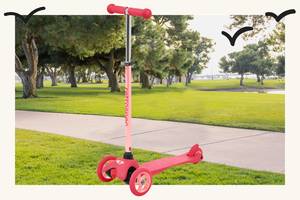
Most children are ready to start riding a kick (or “push”) scooter around three years old. However, this will depend on your child’s fine motor skills. Some kids develop early in this arena, others bloom late! The important thing is to start slow. Stable and low to the ground, three-wheeled scooters like Chipmunk are perfect for beginner riders.
What scooter is best for my child's age and skill level?
For toddlers and young children (ages 3 to 5), three-wheeled scooters like Chipmunk are the best choice. These scooters provide a stable, secure frame, lean-based steering, and a low platform to help them become comfortable balancing and maneuvering on their scooter. Chipmunk Plus comes with the added benefit of having a removable padded seat, so your child can sit and scoot when they get tired.
As your child gets older and increases their fine motor skills, they can graduate to a traditional two-wheeled scooter. The age at which this occurs varies, but six years is a common average.
As your child gets older and increases their fine motor skills, they can graduate to a traditional two-wheeled scooter. The age at which this occurs varies, but six years is a common average.
What is the point of a three-wheeled scooter?
The primary point of a three-wheeled scooter for kids is to provide stability and ease of use for younger children learning how to ride. For one, the three-wheel design offers greater stability than two-wheeled scooters, making it easier for kids to maintain balance and avoid falls as they learn to control the scooter.
Three-wheeled scooters also use a “lean-to-steer” system, where children simply shift their weight to turn the scooter. This intuitive mechanism is easier for young children to grasp than traditional handlebar steering. Overall, the added stability and ease of use found in three-wheeled scooters helps children build confidence, balance, and coordination, developing the skills necessary to transition to a two-wheeled scooter.
Three-wheeled scooters also use a “lean-to-steer” system, where children simply shift their weight to turn the scooter. This intuitive mechanism is easier for young children to grasp than traditional handlebar steering. Overall, the added stability and ease of use found in three-wheeled scooters helps children build confidence, balance, and coordination, developing the skills necessary to transition to a two-wheeled scooter.
What should I look for in a kids scooter?
For a scooter for a young child (age three and up) look for a stable three-wheel scooter with lean-to-steer handlebars. Features that improve safety and accessibility include a low platform height, grippy, textured decking, an easy-to-use rear brake, soft and durable polyurethane wheels, and adjustable handlebars that can accommodate your child as they grow. Accessory features like a removable folding seat and LED lighting to improve visibility will also add value.
Are kick scooters safe for kids?
Yes, kick scooters are a safe, healthy toy for kids when proper safety measures are taken. While they offer a fun way for kids to exercise and enjoy the outdoors, it's important to recognize the potential risks and take steps to minimize them. Ensuring kids wear helmets and protective gear, choosing age-appropriate scooters, and supervising young children while they ride is an essential part of keeping scooters safe for your child.
Do kids need a helmet for a kick scooter?
Do kids need pads for scooters?
While a helmet is the most crucial piece of safety equipment for kids on scooters, protective pads are also recommended, especially for beginners or younger children. Falls and scrapes are common when learning to ride, and pads significantly reduce the risk of injuries to knees, elbows, and wrists.
Do kids scooters have weight limits?
Every kids scooter will have its own recommended weight limit. Our three-wheeled Chipmunk Plus, designed for toddlers age three and older, has a recommended weight of 130 lbs maximum. The removable folding seat, however, is designed to accommodate weights no more than 55 lbs.
What are the common injuries associated with kids scooters, and how can I prevent them?
While kick scooters are generally quite safe, injuries aren’t unheard of. Common injuries associated with kids scooters include head injuries, fractures of the wrist, elbow, and ankle due to falls, and lacerations and abrasions on hands, knees, and elbows. To prevent these injuries, it is crucial for kids to wear a properly fitted helmet and consider wearing elbow, knee, and wrist pads. Choose the right scooter for your child’s age and size, supervise young children closely, and teach your kid to ride in safe areas like sidewalks or bike paths to minimize risks.
What are the benefits of kids scooters?
Scooters offer several benefits for young children. Riding a scooter helps children develop gross motor skills, balance, and coordination. It provides an engaging way for kids to stay active and fosters a sense of independence and exploration.
While these benefits apply to two-wheeled scooters, the three-wheeled, lean-to-steer design of our kids scooters also provides greater stability, making it easier for kids to balance and become comfortable pushing, and greatly reducing the risk of falls.
While these benefits apply to two-wheeled scooters, the three-wheeled, lean-to-steer design of our kids scooters also provides greater stability, making it easier for kids to balance and become comfortable pushing, and greatly reducing the risk of falls.
What are the disadvantages of kids scooters?
Scooters aren’t as versatile as kids bikes. Scooters are suited for flat, smooth surfaces and short distances. You can’t ride a scooter on gravel or dirt, and (for obvious reasons) riding multiple miles on a bicycle is much easier than on a scooter.
That said, there aren’t many disadvantages to kids scooters, at least not when purchasing them for young children who are still developing balance and coordination. Like a bike or skateboard, there are risks of falls and injury, but wearing a helmet and protective pads will mitigate these risks. Overall, scooters are a great way for young children to build fine motor skills, gain confidence, and play outside.
That said, there aren’t many disadvantages to kids scooters, at least not when purchasing them for young children who are still developing balance and coordination. Like a bike or skateboard, there are risks of falls and injury, but wearing a helmet and protective pads will mitigate these risks. Overall, scooters are a great way for young children to build fine motor skills, gain confidence, and play outside.
What is the price range for kids scooters?
The price of non-electric kids scooters can soar over $150, but affordable and reliable kick scooters for kids can be found for $50 or less, too. Our three-wheeled Chipmunk is priced at $34.99, and our upgraded Chipmunk Plus, which comes with a removable folding seat and LED lighting on the wheels, is $49.99.
Are kids scooters healthy?
Yes, riding scooters is very healthy for young children. Scooters offer a fun way to get exercise and can improve cardiovascular health, balance, coordination, and leg strength. The act of pushing and balancing engages a diverse range of muscle groups. Kids scooters are also a great stepping stone into riding kids bicycles. Beyond the physical benefits, outdoor activities like scootering boost mood and mental health, giving your child a sense of accomplishment.
How can I teach a kid to ride a scooter?
Start by finding a safe, open space with a smooth surface. Let your child practice balancing on the scooter while stationary, then encourage them to push off gently with one foot. Once they're comfortable, show them how to steer by leaning their body in the desired direction. Remind them to keep their knees slightly bent and their eyes focused ahead. With patience and practice, they'll be scooting around in no time!
How long does it take for a child to learn to ride a scooter?
The time it takes for a child to learn to ride a scooter varies depending on age, coordination, and prior experience with similar activities. That said, most children aged three and up can grasp the basics of riding a three-wheeled scooter within a few hours or days! Mastering a two-wheeled scooter may take a few weeks of practice, but if your child learns the basics on a three-wheeled model, the learning curve will be much easier!
Where can my child safely ride their scooter?
Your child can safely ride their scooter on sidewalks, paved trails, in cul-de-sacs, suburban parks, and empty parking lots, and of course around your own driveway, as long as it's enclosed and safe. Avoid busy streets, steep inclines, and uneven surfaces.
How do I maintain and care for a kids scooter?
Kids scooters are very simple, and require little to no maintenance. To keep your kid's scooter in good condition, regularly wipe it down to remove dirt and grime, check and tighten any loose screws or bolts, and ensure the rear push brake is working properly. Store the scooter in a dry place when not in use.


