What is a road bike?
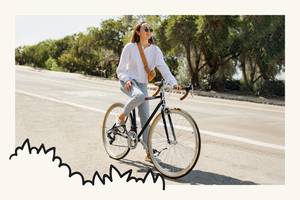
A road bike is a streamlined, lightweight bicycle designed for speed and performance on paved roads. Road bikes have dropped handlebars to foster an aggressive, streamlined riding position; narrow, high-pressure tires, lightweight frames, a rigid front fork for maximum power transfer and efficiency; and a wide range of gears, allowing the rider to tackle varied inclines. (Our
Culver Road Bike, for example, has 14 speeds).
What are road bikes best for?
Road bikes are best for riders who prioritize speed and efficiency on paved roads. They excel at covering long distances, climbing hills, and providing a fast, responsive ride. If you enjoy group rides, high-energy workouts, have a long commute, or are searching for the best performance available on two wheels, then a road bike is an excellent choice.
What is the best road bike today?
While questions like this will usually elicit a response of some multi-thousand dollar bike with more tech and high-end accessories than an automobile, here at retrospec we believe the best road bike is the one that best suits you, the rider.
Is a road bike good for beginners?
Road bikes can be great for beginners. The learning curve is slightly steeper than on a casual, comfort-focused model like a
beach cruiser, but plenty of cyclists learn to ride on a road bike! The important thing is to think about the type of riding you hope to do. If you plan to commute to work, exercise, and ride long distances on paved surfaces on your bike, then a road bike is an excellent purchase. These bikes are lightweight and fast, with a focus on maximum performance.
If you’re most interested in comfortable, casual riding, or looking for a versatile model with accessories like storage racks, handlebar baskets, lights, you might want to consider a
city bike instead. If you want to ride on gravel, dirt, or other mixed terrain, a road bike also isn’t a good choice. Look at
gravel or mountain bikes instead! You can take our free, 30-second “
Help Me Choose a Bike” quiz to help narrow your options.
What are the advantages of a road bike?
Road bikes excel in efficiency and speed on paved roads, thanks to their lightweight frames, aerodynamic design, and narrow, high-pressure tires. Their drop handlebars offer multiple hand positions for comfort on long rides and improved aerodynamics. The versatile gearing prioritizes higher speeds and efficient pedaling, ideal for covering long distances or tackling terrain with lots of elevation variance. Compared to other bike styles, road bikes provide a more thrilling and responsive ride, appealing to those seeking a fast, efficient, and/or fitness-focused cycling experience.
What are the disadvantages of a road bike?
Because road bikes are optimized for speed and efficiency on paved roads, they do have some limitations. Their narrow tires and lack of suspension make them less comfortable and suitable for riding on rough or uneven surfaces. The aggressive riding position, with the body leaning forward, can cause discomfort or strain on the back and neck for those new to cycling. Road bikes can also be less stable at lower speeds, making maneuvering in tight spaces or navigating traffic more challenging. Their lightweight construction and thin tires can also make them more susceptible to damage from potholes or debris.
How to size a road bike?
Like any bicycle, road bikes are sized via inseam (the distance from your inner foot to the top inside of your leg). You’ll find in-depth instructions on the “Sizing” tab at the bottom of all of our bikes’ product pages, but in short, you should have about an inch of space between your body and the bike’s top tube. While measuring your inseam is the most accurate way to size a bike, you can also get a rough estimate based on your height. Our
Culver Road Bike comes in four sizes, XS (4’9” to 5’1”), S (5’2 to 5’5”), M (5’6” to 5’8”), and L (5’9 to 5’11”).
Are disc brakes on road bikes worth it?
While disc brakes offer many benefits, they're not necessary for the average road bike rider. Traditional rim brakes—like those found on our
Culver Road Bike—are still highly effective in dry conditions, especially for those primarily riding on dry, flat terrain. Rim brakes are lighter and more affordable. Maintenance and adjustments on rim brakes are much simpler and less costly. Ultimately, the importance of disc brakes depends on your riding style, terrain, and personal preferences. They’re useful on
mountain and gravel bikes, for example, and are also found on many of our hybrid bikes, like
Barron Plus.
What are the benefits of caged pedals?
Caged pedals on a road bike offer a compromise between flat pedals and clipless systems. They provide some foot stability and power transfer improvement over flat pedals, especially when pulling up during the pedal stroke, without requiring cyclists to wear special shoes or cleats. This makes them a good option for riders who want a bit more efficiency and control, but aren't ready to commit to clipless pedals, or for those who frequently need to put their feet down, such as commuters or cyclists navigating urban environments with frequent stops.
What is threadless steering? Is it important for a road bike?
Threadless steering refers to a system where the fork's steerer tube is smooth, without threads, and the stem clamps onto the outside of the steerer tube. This contrasts with the older threaded system, where the steerer tube has threads, and the stem is inserted into the tube and tightened with a wedge bolt. Threadless steering is the standard for modern road bikes, and offers significant advantages in weight and precision. It’s also easier to adjust and allows for wide compatibility between a variety of stems and handlebars.
What is the point of narrow, high-pressure tires in road bikes?
The narrow, high-pressure tires on road bikes are designed to minimize rolling resistance, allowing for greater speed and efficiency on smooth surfaces. The reduced contact patch and higher pressure decrease friction between the tire and the road. The stiffer sidewalls help maintain shape and reduce energy loss during cornering and acceleration. While these tires may sacrifice some comfort and traction compared to wider, lower-pressure options, they are the best choice for riders prioritizing speed and performance on paved roads.
How much do road bikes usually cost?
Most road bikes range from $800 to $3,000 or more. However, not all road bikes have to break the bank! Our
Culver Road Bike is built with high-quality components, including a 6061 aluminum frame, a Shimano 14-speed drivetrain, intuitive handlebar thumb shifters, and 700x28C road tires, but it costs just $499.99!
How long does it take to get comfortable on a road bike?
Getting comfortable on a road bike is a gradual process that varies depending on your previous cycling experience and how often you ride. It can take anywhere from a few weeks to a few months. Initially, you might feel awkward with the bike's handling and the aggressive riding position. As you gain more experience, you'll develop better bike control, balance, and endurance. With regular practice and proper bike fit adjustments, you'll feel increasingly confident and comfortable on your road bike. Just take it slow and ride often!
How much does an average road bike weigh?
Road bikes can weigh as little as 15 lbs and as much as 30 lbs. The UCI (Union Cycliste Internationale) requires professional racing bikes to weigh at least 6.8 kilograms (about 15 lbs), but unless you’re a professional cyclist, your bike will probably weigh closer to 20 to 30 lbs. This is still far lighter than the majority of other bicycles, like
beach cruisers,
city bikes, and
gravel or mountain bikes.
What is a good average speed for road cycling?
Research suggests that the average amateur cyclist travels about 17 to 18 mph on flat ground, while professional cyclists average between 25 and 28 mph. If you’re a beginner rider, however, aim for an average speed of around 10 to 12 mph.
Is a road bike good for everyday use?
Yes! Properly storing and maintaining your bicycle as per the
owner’s manual is important, but road bikes are built for consistent, daily use. Don't be afraid to take your bike out on the pavement as often as you can!
Is it healthy to ride a road bike every day?
Riding a road bike every day is generally very good for your health. Many people commute daily on a road bike, or use their bike to exercise before or after work. That said, overuse injuries can occur with any physical activity, so listen to your body and get adequate rest. Factors like your fitness level, ride intensity, and duration play a role. Incorporating cross-training and prioritizing rest and nutrition are key. Ultimately, find a balance that works for you. If you experience pain or fatigue, don’t be afraid to take a rest day!
What is the life expectancy of a road bike?
A road bike's life expectancy depends heavily on factors like frame material, usage, maintenance, and riding style. Aluminum and carbon fiber frames typically last 5 to 10 years. Regular upkeep and gentler riding, however, can significantly extend a bike's lifespan. Ultimately, you can anticipate anywhere from 5 to 15 years of use, though certain components will require periodic replacement.
How risky is road biking?
Road cycling has tremendous benefits, both on the personal and societal levels. It keeps us mentally and physically healthy, lowering risks for obesity, cancer, premature death, cardiovascular disease, and even Alzheimer’s. It also provides an affordable mode of transport, is pollution-free, and reduces congestion on the road.
That said, road biking does have risks, because as road cyclists, we’re sharing motorways with automobile drivers, many of whom are traveling at extremely high speeds and (particularly with the advent of mobile phones) may not be paying close attention. According to research compiled by
The League of American Bicyclists, bicyclists’ proportion of all traffic fatalities has increased in recent years. Cyclists represent around 2.6% of all traffic fatalities, although they only account for 1% of all trips.
Your safety is going to depend a lot on where and how you ride. Road biking in small towns, where speed limits and congestion are low and visibility is high, often seems like the safest option, and it can be, but the truth is more complicated. Statistically, rural areas are riskier for road bikers than dense urban centers, where motorists are used to encountering cyclists. Cyclists riding at lower speeds are also often at a higher risk for injury, as the slower you’re riding, the less reaction time a car driver coming up behind you has. Wearing a
bike helmet and outfitting your ride with LED
bike lights for increased visibility will dramatically reduce your risk of injury.
Is road cycling a weight-bearing activity?
No, road cycling is not a weight-bearing exercise. Weight-bearing exercises are those that force you to work against gravity while staying upright, like walking, running, and dancing. While cycling is a physically demanding activity and a stellar cardiovascular workout—and it’s not as low-impact as something like swimming—you are still sitting on a bike seat and pedaling, without putting direct pressure on all the joints and bones of the lower body. If your doctor recommends avoiding weight-bearing activities due to injury, cycling could be a great way to stay healthy!
Do you have affordable road bikes suitable for daily commuting in winter?
The Culver 14-Speed Road Bike is one of the most affordable road bikes you'll find and with free shipping. It's a genuinely capable commuter for riders on dry, paved roads. Its lightweight 6061 aluminum frame, Shimano 14-speed drivetrain, and grooved 700x28C road tires make it fast, efficient, and easy to handle on smooth pavement. If you're commuting on clear winter days on well-maintained bike lanes and roads, the Culver will get you there quickly and confidently. That said, it uses rim brakes, which are most effective in dry conditions, so if your winter commute regularly involves wet roads or heavy precipitation, you may want to consider a different style of bike built for all-weather stopping power. The Atlas 21-Speed Fitness Hybrid (a hybrid bike, not a road bike) and the Beaumont Plus 8-Speed City Bike (a city bike) both come with disc brakes and fenders, making them better suited for year-round commuting in variable winter conditions. For a full breakdown of what to look for in a commuter bike, the retrospec commuter bike guide is a helpful place to start.
What are the best adult bicycles designed for fitness and exercise?
Road bikes are one of the best tools for fitness riding. The aerodynamic riding position, lightweight frame, and narrow high-pressure tires all work together to make you faster and more efficient with every mile, which means you're pushing harder and getting more out of every ride. The Culver 14-Speed Road Bike is retrospec's flagship fitness road bike, with a lightweight 6061 aluminum frame, drop handlebars with multiple hand positions, a 14-speed Shimano drivetrain that handles hills and long flat stretches with ease, and toe clip pedals for more efficient power transfer with every pedal stroke. It comes in four sizes covering riders from 4'9" to 5'11" and ships free, well below what most road bikes cost. For riders who want a fitness-focused ride with a more upright position and added terrain versatility, the Atlas 21-Speed Fitness Hybrid is worth a look as well — though note that it's a hybrid bike, not a road bike, and is designed more for a mix of pavement and light trail riding than pure on-road speed. For help finding the right size and fit before you order, the retrospec bike sizing guide walks you through every step.