


23.7K certified reviews
Bike Gear
Round out your ride with helmets, bike baskets, bike locks, bike trailers, and spare parts to keep handy just in case.
Trusted By Our Loyal Customers

Free shipping over $35

Exceptional Value

Finance starting from $19/month
sort by:
Product Type:


From Our Gear Experts
How do I know what size bike helmet to buy?
Bike helmets are sized by your head’s circumference. To find this measurement, wrap a flexible tape measure around the largest part of your head, just above your eyebrows. Make sure the tape is level front to back (it should rest above your ears). If you don't have a flexible tape measure, you can wrap a string around your head, mark it, and measure its length.
Once you have your head circumference, compare it to bike helmet sizes (Small, Medium, Large, etc.) to find a match. See the “Sizing” tab at the bottom of your helmet’s product page for more info. (Some bike helmets, like our bestselling Silas and Lennon helmets, are one size fits most, and use an ErgoKnob dial to let you fine-tune a snug, comfortable fit.)
Once you have your head circumference, compare it to bike helmet sizes (Small, Medium, Large, etc.) to find a match. See the “Sizing” tab at the bottom of your helmet’s product page for more info. (Some bike helmets, like our bestselling Silas and Lennon helmets, are one size fits most, and use an ErgoKnob dial to let you fine-tune a snug, comfortable fit.)
Does bike helmet shape matter?
Bike helmet shape is based on discipline, and is less a question of safety and more of comfort and style. For example, helmets designed for road cycling, like Silas, are elongated and aerodynamic to reduce wind resistance, with large vents for cooling during long rides. Mountain bike helmets like Rowan prioritize protection, with extended coverage at the back of the head and a visor to shield the face from sun, rain, and debris.
Commuter helmets like Lennon offer a blend of versatile protection and breathability, while cruiser helmets like Remi have a classic skate-style design, with a rounded shape and minimal vents. These focus on style over aerodynamics or specialized features.
Commuter helmets like Lennon offer a blend of versatile protection and breathability, while cruiser helmets like Remi have a classic skate-style design, with a rounded shape and minimal vents. These focus on style over aerodynamics or specialized features.
Do expensive bike helmets make a difference?
It depends what you consider “expensive.” Extensive research shows that in crash testing, most bike helmets offer a similar level of protection, regardless of cost. As long as your bike helmet complies with the U.S. CPSC Safety Standard for Bicycle Helmets, you can feel confident in the safety your helmet provides. As helmet prices increase, you’ll usually see lighter weight and added comfort (ventilation, padding, straps), but there shouldn’t be a difference in safety.
Are cheap cycling helmets safe?
Yes, as mentioned above, even low-cost ($20 to $50) bicycle helmets are safe. According to research by the Bicycle Helmet Safety Institute, “When you pay more for a helmet you may get an easier fit, more vents, and snazzier graphics, but the basic impact protection of the cheap helmets [equals] expensive ones. Just look for a helmet that fits you well.”
What is the 2-2-2 rule when fitting a helmet on your head?
The 2-2-2 helmet rule, sometimes called the 2V2 rule, is a guideline for fitting a bike helmet. It states that:
- The front of the helmet should be no more than two finger widths above your eyebrows. The widest part of the helmet should rest against the back of your head.
- The two side straps should fit snug around each ear in a “V” shape, with the adjustable clip forming the bottom of the V just below the earlobe.
- The chin strap should fit snug but still allow you to open your mouth wide. You should be able to fit two fingers between your chin and the strap.
Is it better to have a tight or loose helmet?
Neither. Your bike helmet should be snug and comfortable, without any pressure points. A loose helmet can slip and fail to cover your head in a crash. It might also slip while riding, obscuring your vision and actually causing a crash. An overly tight helmet will cause pain. In an accident, it can also cause one area of your skull to absorb more force.
Measure your head circumference before purchasing a helmet to avoid buying a helmet that is too tight or too loose. See the “Sizing” tab at the bottom of your helmet’s product page for more info.
Measure your head circumference before purchasing a helmet to avoid buying a helmet that is too tight or too loose. See the “Sizing” tab at the bottom of your helmet’s product page for more info.
Is it better to have a visor on a bike helmet?
Bike helmet visors come with pros and cons, which is why they’re usually included on mountain bike helmets but not road cycling helmets. In short, visors block sun, rain, and debris, and offer additional facial protection in a crash. However, they increase wind resistance, add weight, and can reduce visibility in low light. For mountain biking, a visor is a good choice, and for urban commutes, a helmet with a mini visor may come in handy. For road cycling, however, a visor is most likely a drawback.
Is it better to size up or down on a bike helmet?
It’s best to avoid sizing up or down, and instead find a bike helmet that is made for your head size. All retrospec bike helmets have either an adjustable ErgoKnob dial to fine-tune the fit or several size models with a range of compatible head circumferences. This means you shouldn’t have to make sacrifices. If your head circumference is on the cusp of two ranges, then size up. Sometimes a smaller helmet may feel comfortable for short periods but can cause pain on longer rides.
What is the average helmet size for adults?
The average adult head size is 22 to 24 inches (56 to 61 cm). Different bike helmet brands may use different ranges for their sizing (Small, Medium, Large, and so on). At retrospec, we offer “one size fits most” adjustable helmets like Silas, which can accommodate a wide range of head sizes (54-61cm), and fixed helmets like Remi, which come in size ranges: Small (54-57cm), Medium (57-59cm), Large (59-62cm).
Do bike baskets fit all bikes?
Not all bike baskets fit all bikes, but with retrospec, it’s easy to find out which baskets work for your bike. Scroll down to each basket’s “Specifications” section to find the bikes and ebikes with which it’s compatible.
What can I use as a bike basket?
It’s possible to DIY a bike basket from a metal or wicker basket or a wine crate, but purpose-made bike baskets aren’t that expensive, either. You can purchase handmade steel or woven bike baskets for around $25 to $40.
What are bikes with baskets called?
In the early 20th century, bakers, newsmen, milkmen, and other trades often rode “butcher’s bikes.” These bikes were built with a basket mount built into the front frame (as opposed to the handlebars). Once common, especially in the United Kingdom, butcher’s bikes are extremely rare today. Today, there is no specific name for bikes with baskets, but beach cruiser bikes and city bikes are commonly seen with baskets attached to the handlebars.
Should I put a basket on my bike front or back?
Bike baskets are best attached to the front handlebars of a bike. For rear storage, try a rear rack. Many of our city bikes are built with rear racks. If you ride an ebike, you can purchase purpose-built ebike rear racks, too.
Is it easy to attach a basket to a bike?
Yes, it’s extremely easy to attach a bike basket to a bike, and with retrospec bike baskets, it takes less than a minute. Most of our steel baskets have integrated hooks that slip directly over your bike’s handlebars, and our handwoven bike baskets come with leather straps to buckle around your bars.
Which basket is best for a bike?
It depends on your goals! For style and carrying small items, like a phone, water bottle, house keys, or purse, a handwoven basket is a great choice. If you need something with more durability and capacity for running errands—think trips to the grocery store, library, post office, school, work—a steel basket is ideal. If you ride an ebike, try our dedicated ebike baskets.
How much weight can a bike basket hold?
Bike baskets are designed for carrying small, light essentials like books, a purse, phone, or water bottle. Handwoven wicker baskets have lower weight capacities (5 lbs), while steel baskets like Apollo can hold up to 15 pounds. Ebike baskets like Tote Plus have an even higher weight capacity (22lbs).
How to secure a bike basket?
Every model of bike basket secures differently, but retrospec makes it extremely easy to attach a basket. Our steel baskets come with integrated hooks that slip over the handlebars, and our handwoven baskets come with twin leather straps, so you can buckle the basket to each handlebar.
How many types of bike locks are there?
The three main types of bike locks are U-locks, cable locks, and chain locks.
- U-locks are fixed locks made of a horseshoe-shaped steel shackle. This U-shape helps limit a thief’s ability to leverage the lock apart. U-locks work best with as little free space as possible inside the “U.”
- Cable locks are the cheapest and most common type of bike lock. These locks are essentially a long hose-like cable. They’re flexible and adaptable, and are reliable “deterrents” for most casual thieves in low-crime areas. However, they don't offer as much durability as U-locks and chain locks, and are vulnerable to cable cutters.
- Chain locks are (as the name suggests) similar to cable locks, but are instead made of hardened steel chain links. These locks offer the versatility of cable locks with increased strength and durability.
Do bike locks prevent theft?
Certainly! If you use a high-quality bike lock and follow correct locking techniques, you’ll most likely never have your bike stolen. While no lock is completely impenetrable, there are too many unlocked or poorly locked bikes lying around for thieves to target. Most thieves are unlikely to waste time with a well-locked bike.
Where is the best place to lock a bike?
It’s best to lock a bike to a designated bike rack, as opposed to a signpost or street light. Lock the front wheel, frame, and the locking structure together using a U-lock or chain lock, leaving as little gap as possible for a thief to insert a leveraging device (crowbar, etc.). It’s also best to lock your bike in a well-lit and well-traveled area, and to avoid leaving your bike parked on the sidewalk or street overnight.
How much to spend on a bike lock?
You can spend anywhere from $10 to $50 on a reliable bike lock. Expect to pay more for stronger, more versatile bike locks styles like U-locks, chain locks, and folding bar locks. Cable locks like Grizzly Plus (12mm) and Grizzly (8mm) are much cheaper.
What kind of bike pump is best?
The best bike pump depends on your needs and budget, but if you’re looking for maximum efficiency and value, consider a portable air compressor like Aer.
This handheld electric air compressor features a pressure range of 0 to 150 PSI with automatic shutoff, and is compatible with nearly any inflatable (includes a needle valve and Presta and Shrader adapters). Aer also doubles as a power bank for charging your phone, speaker, headphones, or other electronics. With up to 30 minutes of pump time, you never have to worry about being caught out with a flat tire.
This handheld electric air compressor features a pressure range of 0 to 150 PSI with automatic shutoff, and is compatible with nearly any inflatable (includes a needle valve and Presta and Shrader adapters). Aer also doubles as a power bank for charging your phone, speaker, headphones, or other electronics. With up to 30 minutes of pump time, you never have to worry about being caught out with a flat tire.
What PSI should a bike be pumped to?
The correct PSI (pounds per square inch) for a bike tire varies based on the type of tire. Find this information in your owner’s manual, or consult the sidewall of your tire. Generally, the more uniform and flat the riding surface (and narrower the tire), the higher the pressure.
For reference, the skinny tires on high-performance road bike tires are usually inflated to 80–130 PSI. Slightly wider tires on hybrid bikes are usually 50–70 PSI, while thicker mountain bike tires are often recommended from 30 (off-road) to 50 PSI (on-road).
For reference, the skinny tires on high-performance road bike tires are usually inflated to 80–130 PSI. Slightly wider tires on hybrid bikes are usually 50–70 PSI, while thicker mountain bike tires are often recommended from 30 (off-road) to 50 PSI (on-road).
Do all bike pumps fit all bikes?
Not all bike pumps fit all bikes, but a good bike pump should come with an adapter to fit all bike tires. The two main types of valve stems you’ll see on U.S. bike tires are Presta and Schrader stems. Our Aer portable air compressor comes with adapters for Presta, Schrader, and needle valves (like those found on basketballs and soccer balls), so you never have to worry about pump compatibility, no matter what you need to inflate.
Can I attach a trailer to my bike?
Yes! It depends on the type of bike and the type of trailer, but the overwhelming majority of retrospec bicycles and electric bicycles are compatible with our kids’ trailers, pet trailers, and cargo trailers. A simple, secure coupler fits any bike wheel from 20” to 29” in diameter, though these trailers are not recommended for bikes with thru-axles. See the “Specifications” section at the bottom of each trailer’s product page for a full list of compatible bike models.
What are bike trailers used for?
Bike trailers have many uses. Some riders use them as a safe way to bring young children on bike rides. The American Pediatric Association recommends bicycle-towed trailers over bicycle seats for young children, calling this the safest option for young riders.
Others use bike trailers to carry furry friends, and others use bike trailers to haul cargo, such as camping gear, groceries, or anything else that won’t fit on your rear rack or handlebar basket. Cargo trailers like Rover Hauler are also weatherproof, protecting your belongings from the rain.
Others use bike trailers to carry furry friends, and others use bike trailers to haul cargo, such as camping gear, groceries, or anything else that won’t fit on your rear rack or handlebar basket. Cargo trailers like Rover Hauler are also weatherproof, protecting your belongings from the rain.
How safe are kids’ bike trailers?
Kids’ bike trailers are extremely safe if designed well and used properly. Ultimately, the safety of a kids’ bike trailer comes down to the adult rider who is towing the trailer, but per the American Academy of Pediatrics, bike trailers are much safer than placing a young child in a bike seat.
Our Rover Kids’ Bike Trailer features a padded 5-point seat belt harness, reflective fabric, built-in safety reflectors, sturdy steel components, and a high visibility flag, as well as robust 16” wheels and front and side shields to protect kids from wind, rain, and bugs.
Our Rover Kids’ Bike Trailer features a padded 5-point seat belt harness, reflective fabric, built-in safety reflectors, sturdy steel components, and a high visibility flag, as well as robust 16” wheels and front and side shields to protect kids from wind, rain, and bugs.
Are bike trailers safe for dogs?
Yes! In fact, the American Academy of Pediatrics actually recommends young children ride in bike trailers instead of bicycle seats, and if bike trailers are safe enough for humans, they’re safe enough for dogs, too. Introduce your dog to the trailer gradually, don’t exceed the maximum weight capacity, and make sure to take rest stops during rides.
Our Rover Waggin’ Pet Bike Trailer features an internal leash, wide bed, and anti-slip floor to keep your furry friend secure and safe. A rear doggy door provides no-hassle entry and exit. Meanwhile, the weather-resistant shell includes a 2-in-1 canopy and mesh shielding, so your pup can enjoy the view without unwanted critters or rain.
Our Rover Waggin’ Pet Bike Trailer features an internal leash, wide bed, and anti-slip floor to keep your furry friend secure and safe. A rear doggy door provides no-hassle entry and exit. Meanwhile, the weather-resistant shell includes a 2-in-1 canopy and mesh shielding, so your pup can enjoy the view without unwanted critters or rain.
What is a bike cargo trailer?
A bike cargo trailer is a towable carrier that attaches to the back of a bicycleor ebike. It allows you to increase your bike's carrying capacity, transporting items like groceries, beach gear, school supplies, or camping equipment.
Unlike pet bike trailers or kids’ bike trailers, a cargo trailer is specifically designed for gear and supplies. They typically connect to the bike's rear axle using a hitch, and can be easily removed when not needed. Our Rover Cargo Hauler can hold up to 80 pounds of cargo, has interior D-rings to secure cargo and a waterproof cover to protect from rain, and collapses for compact storage when not in use.
Unlike pet bike trailers or kids’ bike trailers, a cargo trailer is specifically designed for gear and supplies. They typically connect to the bike's rear axle using a hitch, and can be easily removed when not needed. Our Rover Cargo Hauler can hold up to 80 pounds of cargo, has interior D-rings to secure cargo and a waterproof cover to protect from rain, and collapses for compact storage when not in use.
Do all car bike racks fit all cars?
No, not all car bike racks fit all cars. The type of rack you can use depends on your car's design and features. Roof racks require your car to have roof rails or crossbars to attach the rack, truck bed racks are designed specifically for pickup trucks, trunk racks are dependent on your car’s rear design, and hitch racks require a hitch receiver installed on your car.
For the most common and versatile type of car bike rack, the hitch rack, it doesn't depend so much on the bike rack and the car as it does the type of hitch installed on the car. Hitches come in five classes—Class I, Class II, Class III, Class IV, and Class V—based on the tongue weight they can handle and their maximum towing capacity.
As the hitch class increases, the diameter of the hitch receiver increases. Class I and II hitches, for example, have a 1 and 1/4” receiver. Class III and IV hitches, meanwhile, have a 2” receiver. Before you purchase a bike rack, install a hitch receiver on your car based on your vehicle’s maximum towing capacity. Then find a car bike rack that is compatible with your hitch class.
For the most common and versatile type of car bike rack, the hitch rack, it doesn't depend so much on the bike rack and the car as it does the type of hitch installed on the car. Hitches come in five classes—Class I, Class II, Class III, Class IV, and Class V—based on the tongue weight they can handle and their maximum towing capacity.
As the hitch class increases, the diameter of the hitch receiver increases. Class I and II hitches, for example, have a 1 and 1/4” receiver. Class III and IV hitches, meanwhile, have a 2” receiver. Before you purchase a bike rack, install a hitch receiver on your car based on your vehicle’s maximum towing capacity. Then find a car bike rack that is compatible with your hitch class.
What type of bike rack is best for a road bike?
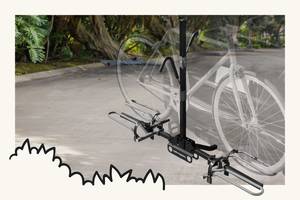
For road bikes, hitch-mounted tray racks like our Lennox Tray are generally considered the best option. They offer excellent stability and security, minimizing the risk of damage to your bike's frame and components. Tray racks hold the bike by its wheels, preventing any contact with the frame, which is particularly important for lightweight road bikes.
Is it easy to put a bike rack on a car?
It depends on the type of car bike rack, but hitch racks (the style we sell at retrospec) are extremely easy to install. The time-intensive part of the process is installing a hitch on your car in the first place. This varies based on the type of car you have and the hitch receiver you’re purchasing. But once your hitch receiver is installed (or if you already have one) it’s as easy as slipping the bike rack into the receiver and securing it with a cotter pin. Installation takes a minute or two, tops!
How do I choose a car bike rack?
We offer two styles of car bike racks. These are frame-loading bike racks like the Lennox Standard, which hold 2-5 bikes via a bike’s top tube (and thus require an adapter for compatibility with step-through frames), and tray racks like Lennox Tray (2 bikes) and Endeavor (2 ebikes), which hold bikes by the wheels. The choice will generally come down to how many bikes you need to carry. If you only need to carry two bikes, a tray rack will do the job. If you need to carry up to five bikes, choose Lennox Standard!
What are the disadvantages of car bike racks?
Car bike racks, while convenient for transporting bikes, do have some disadvantages. Chiefly, they can obstruct the driver's view and limit access to the trunk or rear of the vehicle. Our car bike racks, however, are fully collapsible for easy storage and portability, and fold down so you can access the trunk of your car when the rack isn’t in use.
Do I need a hitch to install a bike rack?
Yes, you’ll need a hitch receiver to install a retrospec car bike rack on your car. There are other options, such as roof racks, trunk-attached racks, and truck bed racks, but a hitch rack is the most reliable, affordable, and versatile car bike rack option.
What is the best way to store bikes in a garage?
The best way to store bikes in a garage is with a bike rack, either a traditional floor-based rack that secures bikes by the front tire, or a vertical rack that holds bikes by their frames. Floor racks are the easiest to take bikes in and out of, while vertical racks maximize space and are good for small garages. Choose the method that best suits your available space and the number of bikes you need to store.
How do you store multiple bikes in a small space?
Bike racks like our Stash Commercial Bike Rack can store up to 20 bikes, but if you want to store multiple bikes in a small space, your best bet is to use a hanging rack like Double Decker, which can hold two bikes on top of each other. If you live in a tiny dorm or studio apartment, you could also purchase a folding bike.
Should I lock my bike in my garage?
It depends where you live and how secure your garage is. Do you share a garage with other people living in the same housing complex? It’s generally safe to store bikes unlocked in a garage, but locking your bike offers extra security. It can deter opportunistic thieves who may have access to your garage, or prevent someone who shares your garage from accidentally taking your bike. If you have a particularly valuable bike or live in an area with a high risk of theft, locking your bike is always good practice.
Can you hang bikes from the ceiling?
Yes, some cyclists choose to store their bikes by hanging them from the ceiling when not in use. Options include pulley systems and ceiling hooks. Hanging bikes from the ceiling is a good space-saving solution, but it's important to consider the weight of your bike and ensure you choose sturdy hooks or a system that can support it. Keep in mind that hanging bikes also makes it take a lot longer to access and store your bike when you need it.
If possible, store your bike on the ground, either with a traditional floor bike rack or a freestanding gravity rack. This makes it much easier to access your bike.
If possible, store your bike on the ground, either with a traditional floor bike rack or a freestanding gravity rack. This makes it much easier to access your bike.
Is it OK to hang a bike by the wheel?
Yes, you can hang a bike by the wheel, but hang it by the front wheel to avoid putting stress on the drivetrain. Make sure the tire is properly inflated and use a bike-specific hook or hanger to protect the rim. If you have a heavy bike—especially an ebike—use a normal bike rack instead of hanging your bike.
Do all bike seats fit all bikes?
Not all bike seats fit all bikes. Seat post diameters can vary: 27.2mm, 30.9mm, 31.6mm, and 34.9mm are all possible post diameters on modern U.S. bikes. However, all retrospec bike seats fit all retrospec bikes! Standalone seats like Parker Comfort Commuter, Chatham Cruiser Comfort, and Harper Vintage Road Commuter are all compatible with any retrospec bike.
How do I find the right bike seat for me?
Finding the right bike seat involves considering your body type and riding style. Consider the type of riding you do, such as casual cruising, commuting, road cycling, or mountain biking. Each discipline calls for different saddle shapes and padding levels.
Most likely, the bike you purchase for your riding style is going to come with a seat that suits the bike, so you won’t need to worry about mixing and matching bike seats. If you’re struggling to narrow down your options, consider our “Help Me Choose a Bike” quiz. It’s free and only takes 30 seconds!
Most likely, the bike you purchase for your riding style is going to come with a seat that suits the bike, so you won’t need to worry about mixing and matching bike seats. If you’re struggling to narrow down your options, consider our “Help Me Choose a Bike” quiz. It’s free and only takes 30 seconds!
What is the difference between a bike seat and a bike saddle?
The terms bike seat and bike saddle are usually interchangeable, and in 99% of uses, you’d be correct to use either. However, some cyclists draw a distinction. They argue that a seat is something you sit on with your entire weight, like when riding a cruiser bicycle, while a saddle is designed to support only part of your weight while riding, like on a road bike. This distinction is not universally agreed upon, though, and both terms are widely used to refer to the same thing: the part of a bicycle you sit on while riding.
What is a wheelset on a bike?
A wheelset on a bike is a pair of wheels, consisting of the front and rear wheels, including the hubs, spokes, rims, and tires. It is what allows the bike to roll and move.
How many miles should a wheelset last?
The lifespan of a wheelsetcan vary greatly depending on factors such as the quality of the wheels, the rider's weight, riding style, terrain, and maintenance. On average, a well-maintained, high-quality wheelset can last anywhere from 5,000 to 10,000 miles or more. It's important to regularly inspect your wheels for any signs of wear and tear, like cracks, dents, or loose spokes, to ensure their longevity and safety.
When should I replace my bike grips?
You should consider replacing your bike grips if you notice visible wear and tear such as cracks, tears, or worn-down areas, reduced grip, discomfort or pain in your hands during rides, or a sticky or tacky feel due to sweat, dirt, and exposure to the elements. You can also replace your grips if you simply want to upgrade to a different style!
How do I know what grips fit my bike?
Most bike grips are designed to fit a handlebar diameter of 22.2mm (7/8 inch), with a grip length of 120mm. This is the “standard size” for most bikes, from mountain bikes and city bikes to road bikes and hybrid bikes. However, some bikes may have different dimensions. To ensure you purchase the right size grips, use a ruler or measuring tape to measure the diameter of your handlebars and check the grip specifications to match.
Keep in mind that grips will have both an “installed diameter” (the outer diameter of the grip) and an internal diameter (usually 22.2mm), which is the diameter of your handlebar, the surface the grip needs to fit around.
Keep in mind that grips will have both an “installed diameter” (the outer diameter of the grip) and an internal diameter (usually 22.2mm), which is the diameter of your handlebar, the surface the grip needs to fit around.
How do you remove and replace bike grips?
To remove old bike grips, you can use a few different methods. For lock-on grips, simply loosen the bolts with a hex key and slide them off. For slide-on grips, you can try twisting and pulling them off, or use a lubricant like compressed air or rubbing alcohol to loosen them. If they're stubborn, you can carefully cut them off with a razor blade or pocket knife.
To install new slip-on grips, clean the handlebars with rubbing alcohol, spray a lubricant like hairspray or soap and water inside the grips, and slide them onto the handlebars. For lock-on grips, align them on the handlebars, tighten the bolts with a hex key, and ensure they're secure.
To install new slip-on grips, clean the handlebars with rubbing alcohol, spray a lubricant like hairspray or soap and water inside the grips, and slide them onto the handlebars. For lock-on grips, align them on the handlebars, tighten the bolts with a hex key, and ensure they're secure.


