


23.7K certified reviews
Bike Bags
Bring everything you need along for the ride with our spacious, weather-resistant bike bags. Easy, secure attachment, plenty of room for all your gear, and a waterproof rain cover included – you're ready to roll!
Trusted By Our Loyal Customers

Free shipping over $35

Exceptional Value

Finance starting from $19/month
sort by:
Product Type:


From Our Gear Experts
What are my storage options on a bike?
From groceries and gym clothes to laptops and textbooks, part of the fun of cycling is being able to take things with you! Luckily, there are plenty of ways you can do this. A simple way to carry things on a bike is a bike basket, which attaches to the front of your handlebars. (If you ride an electric bike, there are ebike baskets made especially for those, too.) Many retrospec bikes, like our city bikes and electric commuter bikes, also have rear racks, and you can install an ebike rear rack if your bike doesn’t have one. Once you have a rear rack, the best way to carry things on your bike is with a dedicated bike bag, either in the form of side panniers (saddlebags) or in a trunk bag, both of which can be quickly mounted to the rear rack of your bicycle. (NOTE: If bike bags don’t give you enough space, consider a cargo trailer, which can hold up to 80 lbs.)
What are bags on a bike called?
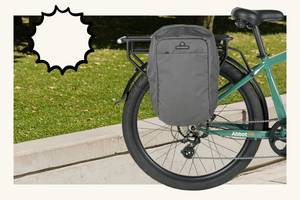
Bike bags can be called a variety of names. If they hang over the sides of your bike, they’re usually referred to as saddlebags, side bags, or panniers. If they sit on top of the bike's rear rack, they’re called trunk bags. These two options offer the most storage space. Bike bags may also take the form of handlebar bags or “seat packs” (which attach beneath your bike’s seat).
What is the difference between saddlebags and panniers?
There is no real difference between saddlebags and panniers on a bike. The two words are interchangeable. Both commonly refer to bags that hang from the sides of your bike’s rear rack, like the saddlebags on a horse.
What are bike bags made of?
Our pannier bike bags are made from rugged 600D recycled PET (polyethylene terephthalate) fabric. They include zippered pockets and interior laptop sleeves, as well. Our trunk bag is similarly built, from 300D recycled PET. Other bike bags may use materials like nylon, canvas, PVC, or leather.
What storage features do bike bags include?
As noted above, our pannier bike bags and trunk bags are built from robust, 600D and 300D recycled PET fabric. They also come with rain covers with reflective logos for inclement weather. The side panniers include zippered pockets and interior laptop sleeves, as well as a carry strap for easy transport off the bike. The trunk bag features a spacious main compartment, several internal and external zippered pockets, and a top bungee strap for added storage, as well as its own detachable carry strap.
What type of bag is best for commuting on a bicycle?
For commuting on a bike, panniers or trunk bags are the best choice due to their ample storage and weather resistance. They’re ideal for carrying larger items like laptops, books, and groceries, and they evenly distribute weight. Meanwhile, over-the-shoulder messenger bags offer stylish accessibility for essentials, while handlebar bags provide quick access to small items. Frame bags are useful for tools and spares. All in all, consider your typical load and weather conditions, but realize that panniers generally offer the most practicality for daily bicycle commuting.
Do bike bags work on ebikes?
Yes, bike bags will work on ebikes just as well as on pedal bicycles, as long as your ebike has a rear rack! Our bike bags, which attach via sturdy Velcro straps, are compatible with all of our Haul ebike racks and most other modern bicycle rear racks.
Panniers vs. rear rack trunk bags?
Bicycle panniers and rear rack trunk bags both offer storage solutions for cyclists, but differ in design and capacity. Panniers are side-mounted bags that hang on either side of a rear rack, providing large volume for carrying heavier loads and distributing weight evenly. Rear rack trunk bags, on the other hand, sit centrally atop the rear rack, offering a more compact, streamlined storage space. Trunk bags are generally better for lighter loads and quick access, while panniers excel at distributing loads of larger, heavier items for commuting, touring, or grocery runs.
Is a seat pack better than a pannier?
While a seat pack—a small storage bag attached beneath a bike’s saddle—offers a streamlined, central, lightweight option for bikepacking and long-distance cycling, panniers remain the best choice for basic commuting and casual riding. Panniers provide significantly more storage capacity, allowing you to carry groceries, laptops, books, water bottles, changes of clothes, and other daily essentials with ease. Their side-mounted design distributes weight evenly, improving stability and comfort, especially when carrying heavier items. This makes panniers the most practical and efficient way to transport belongings on a bike for regular use.
Can I ride a bike with just one pannier?
Yes, you can ride a bike with a single pannier. It's perfectly fine, especially if you're carrying a light load. Using a pair of panniers distributes weight evenly for optimal balance, but a single pannier is sufficient for transporting smaller, lighter items. Just be mindful that a heavier load in a single pannier can affect your bike's balance and handling, particularly at low speeds or around sharp turns. If you're carrying substantial weight, using both panniers is better for stability.
Do bike panniers fit on all bikes?
Not all panniers will fit on all bikes, but our Sidekick Duo Saddlebag Panniers are designed to fit the majority of modern bicycle rear racks, including retrospec ebike rear racks like Haul, Haul Lite, and Haul Wide.
Do I need a rear bike rack to install panniers?
Yes, you’ll need some form of rear rack on your bicycle to install any panniers or trunk bags. The good news is that our panniers and trunk bags are designed to fit almost any modern rear rack, both ebike rear racks and the racks found on pedal bicycles like our city bikes.
How do you put a trunk bag on a rear bike rack?
Installing a trunk bag onto a bicycle rear rack is simple with Cahoot Rear Rack Trunk Bag. Simply place the trunk bag on top of the rear rack, loop the integrated Velcro straps around the rack, and pull them tight. (Make sure the bag is secure, but not overly tight, and that it sits evenly on the rack, without overhanging excessively.) See a full list of Installation Instructions for more information.
Why don't some bikepackers use panniers?
Although panniers are the best way to store and carry things on a bike, many ultralight bikepackers don’t use them due to their limitations off-road and on technical terrain. While offering significant storage, panniers also add weight and bulk to a bike, making it less agile and more difficult to maneuver through narrow trails, rocky sections, or steep climbs. The side-mounted design can also increase the risk of snagging on obstacles or branches. Instead, bikepackers often prioritize a minimalist storage approach (see below).
What type of bags are best for bikepacking?
For bikepacking, a combination of bags is often ideal to maximize storage and distribute weight effectively. Frame bags, which fit within the bike's frame triangle, are useful for carrying heavier items like water, tools, and cooking gear, keeping them low and centered for stability. Seat bags, mounted under the saddle, offer ample space for clothing and sleeping gear. Handlebar bags, strapped to the handlebars, are perfect for quick-access items like snacks, maps, and electronics. This combination of bags is called the “bikepacking trinity” and allows for organized and efficient packing, ensuring a comfortable and balanced ride during multi-day adventures.
Why do cyclists wear messenger bags?
Cyclists wear messenger bags primarily for their practicality and accessibility, although they’ve also become somewhat of a fashion statement in recent years. While not as comfortable as traditional two-strap backpacks when carrying heavy weight, the single strap, over-the-shoulder design allows for quick and easy access, allowing riders to swing the bag to the front for simple retrieval of items without dismounting. This is a crucial feature for messengers and delivery cyclists, who usually ride in urban environments where frequent stops are common.


